Why Won't My Baby Sleep in the Cot? What's Really Going On (And What Actually Helps)
You lower them in. You hold your breath. You move so slowly it barely counts as movement.
And they wake up the moment their back hits the mattress.
Or maybe they do go down, but only for twenty minutes before they're calling for you again. Or they'll sleep in the pram, on you, in the car, anywhere, really, but the cot is an absolute no.
If this sounds familiar, this is one of the most common things families bring to me. And the reasons behind it are almost always more nuanced than the internet suggests.
Why some babies resist the cot so strongly

Before jumping to fixes, it helps to understand what's actually going on.
Your baby spent nine months in the warmest, most physically close environment imaginable. The cot, by comparison, is still, flat, cool, and quiet.
For many babies that transition is straightforward enough. For others, particularly those with sensitive temperaments, it's quite difficult. Not because something has gone wrong, but because they are wired to notice the difference.
They attach through their senses
Babies experience safety through all five senses. They feel safe when they can see you, hear you, smell you, feel you close. Even in the womb, your voice was the one your baby heard most clearly, muffled and constant, and your scent was something they were already becoming familiar with in those final weeks. The cot offers none of that. So when a baby protests the cot, they are usually not being difficult. They are telling you that sleep feels vulnerable without you nearby, and they are right. It is. Sleep is a vulnerable state for all of us. Babies just haven't yet learned that they are safe enough to do it alone.
The temperature shift is real
Moving from warm arms to a cool mattress triggers a physical response in babies, particularly newborns and young babies. Even a fraction of a degree change can be enough to rouse a baby who was drifting off. This is one of the most common reasons for the classic "transfer fail," where a baby seems deeply asleep and wakes the moment they touch the mattress. It's also closely linked to why some babies wake the second you put them down more generally, not just in the cot.
Some babies are simply more attuned
Sensitive babies, sometimes called orchid babies, feel everything more intensely. They notice the change in smell, the shift in temperature, the absence of movement, the sound of your breathing no longer nearby. For these babies, cot resistance isn't a phase to push through. It's a signal that the transition needs to be slower, gentler, and more gradual than any generic advice will tell you.
These babies aren't forming bad habits. They are exactly as they are supposed to be. The approach just needs to fit them.
The most common reasons babies won't sleep in the cot
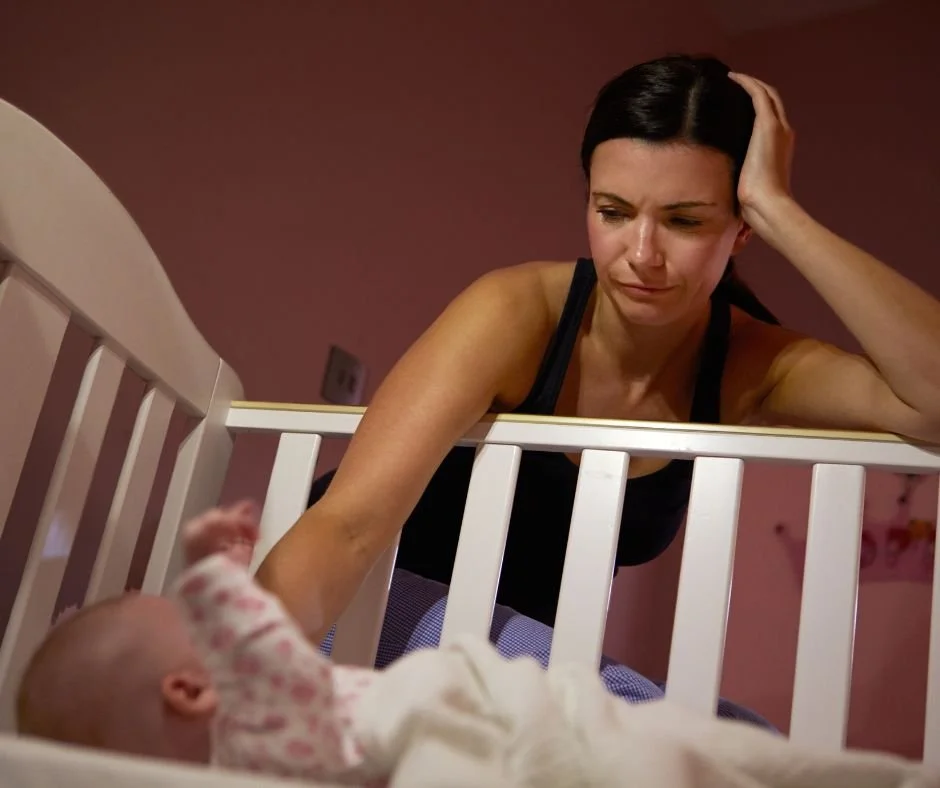
The environment has changed between falling asleep and waking.
If your baby falls asleep in your arms, at the breast, or with movement, and then wakes in a still, quiet cot, their nervous system notices the discrepancy. This is the most common cause of the classic transfer fail and of babies who resettle in arms but not in the cot.
The cot doesn't feel familiar yet.
Babies sleep best in spaces that feel safe and known. If the cot is somewhere they spend very little time while awake, it can feel unfamiliar and therefore unsafe at sleep time. Making the cot a positive, familiar place during waking hours, playing there, singing there, spending time there together, changes how it registers for your baby.
Sleep pressure isn't quite right.
Sometimes cot resistance is less about the cot itself and more about timing. If sleep pressure hasn't built sufficiently by the time you're trying to put your baby down, they won't be ready to commit to sleep regardless of where they are. And if it's built too high, the dysregulation that comes with being very tired can make settling anywhere harder. Getting a sense of how many naps and how much daytime sleep your baby actually needs helps here too.
The sleep environment isn't quite right for this baby.
Some babies need it very dark, very quiet, and very still to settle. Others actually find background noise and a sense of gentle movement reassuring. There's no universal right answer. It depends on your baby's sensory temperament. A sensory-seeking baby and a sensory-avoiding baby often need quite different sleep environments, and finding which one fits your baby can make a significant difference.
They are going through a big developmental phase.
Around six to nine months, and again around twelve to eighteen months, separation anxiety tends to peak. This is a completely normal developmental stage, not a step backwards. During these windows, cot resistance often increases even in babies who were previously settling well. It's closely related to why night waking ramps up more generally during these stages. It passes, but it usually needs more support rather than less during that time.
What actually helps

Make the cot feel familiar before sleep time.
Spend time with your baby in the cot space during the day when they are happy and alert. Play games like peek-a-boo, sing songs, do nappy changes there. The goal is for the cot to become a place associated with you, with fun, with safety, not just with being left alone. Once your baby is comfortable in the cot while awake, settling there for sleep becomes a much smaller ask.
Use your scent.
Babies attach through their senses, and smell is one of the most powerful. Sleeping with the cot sheet or sleep bag for a night or two means the space carries your scent before your baby ever sleeps there. It's a small thing that can make a real difference, particularly for sensitive babies.
Slow the transfer right down.
If transfers are failing, the most common fix is simply taking longer. Wait until your baby is in a deep sleep before attempting to move them. Signs of deep sleep include slow, even breathing, completely relaxed limbs, and no flicker of movement behind the eyelids. Lower them slowly, keep your hands on them for a moment after they're down, and step back gradually rather than all at once.
Start with the easiest sleep first.
Rather than overhauling everything at once, pick the sleep where your baby is most likely to settle, often the first nap of the day, and work on that one first. Once cot sleep is established at that time, building to other naps and eventually nights becomes much more manageable.
Consider an intermediary step.
If the cot feels like too big a jump, a floor bed or a side-car arrangement next to your bed can be a gentler transition. Some babies who absolutely refuse the cot will settle readily on a mattress on the floor, particularly if you start by lying with them and gradually move away over time. It's not giving up. It's finding a route that works for your baby.
Keep the environment the same where possible.
If your baby is used to napping in a light room with background noise, suddenly moving them to a dark, silent cot can feel like too many changes at once. Match the new sleep space to the conditions they already know as closely as you can, and introduce changes gradually over time.
Respond to what your baby is telling you.
If your baby becomes distressed during the transition, pick them up. Resetting and trying again is not failure. It's responsive parenting. A baby who learns that their cot is a safe place where their needs are met will settle there far more readily than one who has learned that distress goes unanswered.
What about contact naps?

Contact naps are not a problem to fix. They are biologically normal, developmentally appropriate, and often exactly what a sensitive or young baby needs. There is no rush to move away from them unless they have stopped working for you. I've written more about this in My Baby Will Only Sleep on Me – Is That a Problem?
If you do want to work toward more cot naps, the approach above gives you a gentle starting point. But if contact naps are still sustainable and your baby is thriving, there is nothing wrong with continuing them while your baby grows into being ready for something different. The same goes for feeding to sleep, which I've covered in Is Feeding to Sleep a Bad Habit?
A note on the floor bed

If the cot is a firm no regardless of everything you try, a floor bed can be a wonderful alternative. A firm mattress on the floor gives your baby their own sleep space without the confinement of a cot. You can lie with them to settle and gradually move away over time. For many sensitive babies, this feels far less threatening than a cot and can be a brilliant stepping stone.
The most important thing is that the sleep space is safe. Anchor all furniture, remove small objects, cover sockets and sharp corners, and ensure windows and doors are secured. Think of the whole room as the sleep space once your baby is mobile.
When to get some support
If you have tried adjusting the environment, slowing the transition, and tuning into your baby's temperament, and cot sleep is still not coming together, it might help to look at the whole picture with someone who understands your baby's specific needs.
My From Contact to Cot guide walks you through a gentle, responsive transition at your baby's pace, without pressure or rigid steps.
Or if you'd like to talk through what's happening for your baby specifically, you can book a free 15-minute call here. No agenda. Just a conversation.
Your baby isn't giving you a hard time. They're having a hard time. There's a difference. And once you understand what they need, things tend to shift.
Frequently Asked Questions
Why won't my baby sleep in the cot?
The most common reasons are that the sleep environment feels unfamiliar or has changed between falling asleep and waking, that sleep pressure isn't quite right, or that your baby has a sensitive temperament and finds the transition from your arms to a still, cool surface difficult. It's almost never about bad habits.
Why does my baby wake up as soon as I put them in the cot?
This usually comes down to a combination of temperature shift, sensory change, and sleep depth. Babies who surface from light sleep and find the environment has changed from when they fell asleep may rouse fully. Waiting for a deeper sleep state before transferring, and keeping your hands on them for a moment after putting them down, often helps.
How do I get my baby to sleep in the cot without crying?
Start by making the cot familiar during waking hours rather than just at sleep time. Use your scent on the bedding, slow down transfers, and begin with the easiest sleep of the day rather than trying to change everything at once. For very sensitive babies, a gradual transition starting with lying together on a floor bed can be a gentler route.
Is it okay if my baby only sleeps on me?
Yes. Contact napping is biologically normal and not a habit that needs breaking unless it has stopped working for you. There is no rush to move to the cot before you and your baby are ready.
Why does my baby sleep in the pram but not the cot?
Movement and the slightly more enclosed feeling of a pram can feel more familiar and comfortable for babies used to contact. The transition to a still, flat cot can feel very different. Mimicking movement during transfer, or using a floor bed as a stepping stone, can help bridge that gap.
At what age should a baby sleep in a cot?
There is no set age. The NHS recommends a cot or Moses basket in your room for the first six months, but many babies transition to the cot gradually over time and at different rates. What matters most is finding a sleep arrangement that works safely for your whole family, not hitting a particular milestone by a certain age.