How Many Naps Should My Baby Have in a Day?
You've checked the charts. You've compared notes with your NCT group. You've counted the minutes since the last nap and still ended up second-guessing yourself at the end of the day.
So let's slow down and talk about this properly - without rigid rules, without pressure, and without making you feel like you're constantly getting it wrong.
Free Download
Not sure where to even start with your baby's sleep?
My free guide cuts through the noise and helps you understand what's actually going on, so you can stop second-guessing and start feeling more confident.
Get the free guide →How Many Naps Does a Baby Need? The Honest Answer

There isn't one correct number of naps that every baby should be having on any given day. Babies are wonderfully variable. Their sleep is shaped by their biology, their temperament, their total sleep needs across 24 hours, and where they are developmentally right now.
What I can give you is a gentle picture of what many babies do at different ages - not as rules, and not as deadlines, but as a loose map so you know roughly what territory you're in.
Baby Nap Schedule by Age: What Many Babies Do

Newborn nap schedule (0–3 months)
Newborns sleep little and often. There isn't really a schedule at this stage, and that's completely expected. You might see anywhere from 4 to 8 short sleep periods across the day and night. Their circadian rhythm hasn't properly developed yet, so days and nights can feel blurred and unpredictable. This is biology, not a problem.
How many naps does a 3-month-old need?
Around three months, many babies begin to show slightly more pattern to their sleep, though it can still feel irregular. Most babies this age take around 3–4 naps per day, and short catnaps are very common. If your 3-month-old seems to only sleep for 30–45 minutes at a time, that is within normal range.
How many naps does a 4-month-old need?
At four months, many babies are somewhere between 3 and 4 naps a day. This is also a stage where sleep can feel like it's changing or becoming harder - not because anything has gone wrong, but because sleep architecture is maturing. Shorter, more frequent naps are still completely normal here.
How many naps does a 5 or 6-month-old need?
Around five to six months, many babies settle into a pattern of 3 naps a day, though some are still taking more. It's also the age where you might start to notice that one nap is longer than the others, or that timings are beginning to feel a little more consistent. Some babies this age are genuinely ready for 3 naps; others are still in the 3–4 range.
How many naps does a 7, 8, or 9-month-old need?
Between about 7 and 9 months, many babies begin moving towards 2 naps a day. This is one of the most common nap transitions, and it rarely happens overnight. You might notice that one nap starts to feel harder to settle, or that your baby is pushing back on a third nap before naturally dropping it altogether.
If you're working through this change, the blog, Tips for How to Transition Your Baby from 2 Naps to 1 Nap, walks through it gently and practically.
How many naps does a 12-month-old need?
Most babies around 12 months are on 2 naps, though some are beginning to show signs of readiness for 1. The transition to one nap usually happens somewhere between 12 and 18 months, and it's one of the trickier transitions, because the timing window for that single nap matters more once there's only one.
When do toddlers drop to 1 nap?
Most toddlers move to one nap somewhere between 12 and 18 months, with 14–15 months being fairly common. A small number of babies make this shift earlier; some hold onto two naps a little longer. Neither is a sign that something is wrong.
Why Do Babies Need Naps? The Biology Behind It
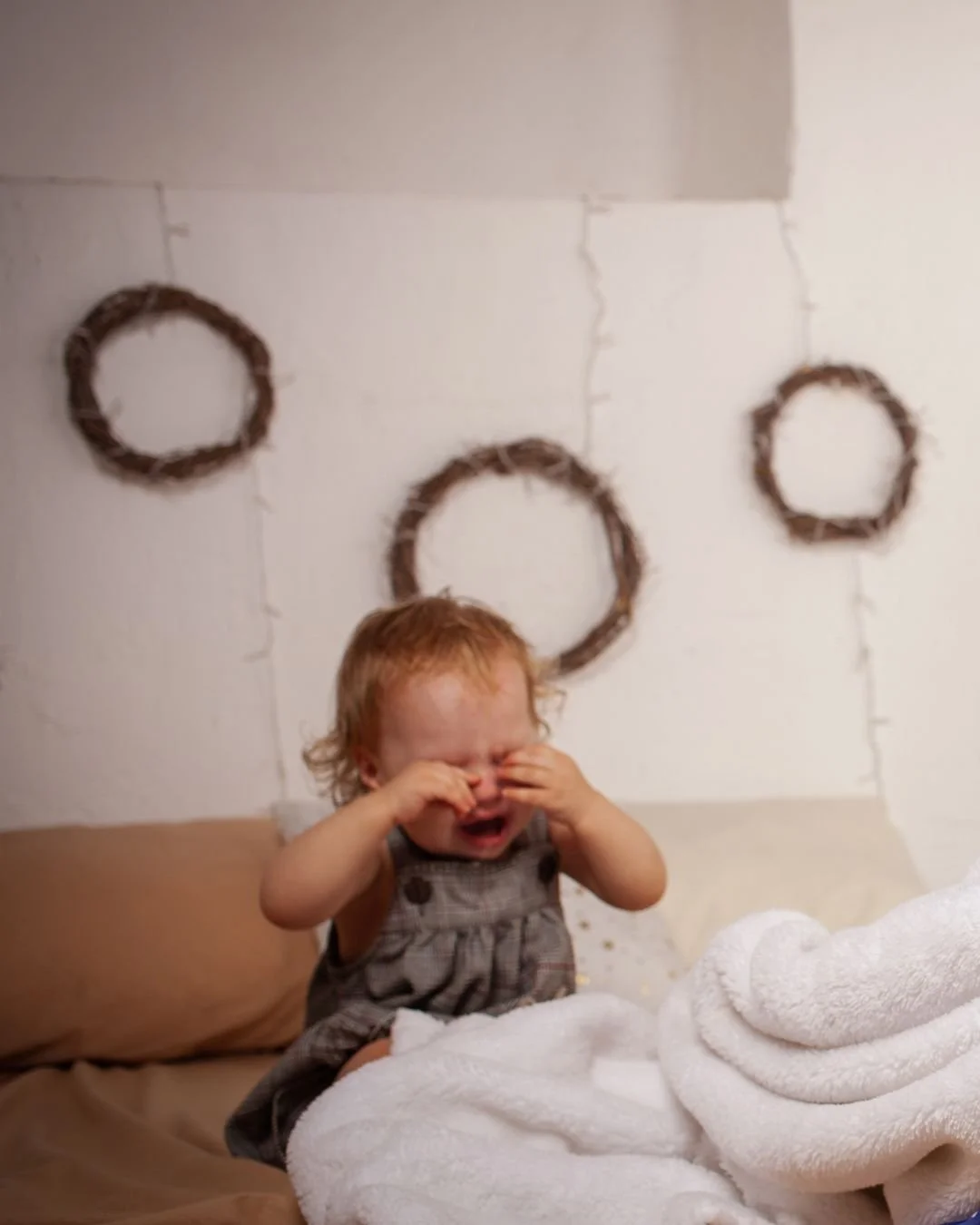
Naps are about something called sleep pressure - the biological drive that builds the longer we stay awake. A substance called adenosine gradually accumulates in your baby's brain while they're awake, creating a growing need for sleep. Naps allow that pressure to ease so your baby doesn't become dysregulated and overwhelmed.
As babies get older, their capacity to tolerate wakefulness grows. That's why the number of naps naturally reduces over time - not because you've done anything, but because their developing nervous system can handle longer stretches before needing a rest.
This is why trying to keep a young baby awake for longer than is comfortable for them doesn't help sleep at night. It simply builds too much pressure too fast, and a dysregulated, grumpy baby is harder to settle, not easier.
Wake Windows and Baby Naps: What You Actually Need to Know

Wake windows - the suggested amount of time a baby can stay comfortably awake between sleeps - can be a useful starting point. But they are a rough guide, not an exact science, and they're not one-size-fits-all.
Some babies comfortably manage at the longer end of their suggested wake window. Others need to go down sooner. Some thrive with a longer morning nap and a shorter afternoon one. Others prefer it the other way around. All of this is within the range of normal.
Rather than watching the clock anxiously, watch your baby. Yawning, rubbing eyes, losing interest in play, or becoming suddenly unsettled are all cues that sleep is needed. Your baby is communicating with you - and reading those signals is more useful than any chart.
If wake windows have been stressing you out, the blog, Why Wake Windows Might Be Stressing You Out - And What Actually Helps With Baby Sleep, explores this in more depth.
Why Is My Baby Only Taking Short Naps?

Short naps - often 30 to 45 minutes - are one of the most common concerns I hear from parents. And most of the time, they are not a problem.
Short naps are biologically normal, particularly in the first six months. Some babies are natural catnappers. This doesn't mean their overall sleep is insufficient or that anything needs to be fixed.
In practice, if your baby is generally content between naps, is feeding well, and is settling reasonably at night, short naps are likely just part of their individual rhythm - not a sign that something has gone wrong.
I talk about this in more detail in Is There a Gold Standard for Baby Sleep?, including why catnapping is biologically normal and not a cause for concern.
Sleep Guides
Ready to understand your baby's sleep properly, not just guess at it?
My sleep guides walk you through the biology in plain language, with practical steps tailored to your baby's age. No rigid schedules. No crying it out. Just clarity.
Browse the sleep guides →What Matters More Than Counting Naps

Here's the shift that genuinely helps: stop counting naps and start looking at the whole picture.
What matters is total sleep across 24 hours - day and night combined. There is only so much sleep any young child needs in a day, and that total is fairly fixed. If daytime sleep is very long or lands too close to bedtime, there may not be enough sleep pressure left for your baby to settle well at night. If naps are too short or too spread out, dysregulation can creep in and make evenings harder.
Rather than focusing on numbers, ask yourself these three things:
Does my baby seem reasonably content and regulated between naps? Is bedtime generally manageable? Are we finding a rhythm that feels responsive to my baby's cues?
Those questions get you closer to what actually matters than any chart will.
When Baby Nap Patterns Start to Change
Nap transitions are rarely clean or sudden. One nap might shorten before the pattern fully shifts. Bedtime might feel harder for a bit while things are in flux. Sleep pressure may land differently as wakefulness capacity grows.
This is normal, even when it feels unsettling. The rhythm will settle again - it just needs a little time to find its new shape.
A Gentler Way to Think About Baby Naps

Naps do not need to be perfect to be perfectly fine. An off-day won't undo good rhythms. A short nap won't break anything. What matters far more is the overall pattern over days and weeks, and approaching it with calm confidence rather than anxious clock-watching.
The question "how many naps should my baby have?" becomes much easier to sit with when you shift focus from a number to your baby's overall wellbeing, their total sleep balance, and what feels sustainable for your family. That's where clarity lives.
Frequently Asked Questions About Baby Naps
How many naps should a 3-month-old have?
Around three months, many babies take 3–4 naps per day. Short, frequent naps are completely normal and expected at this age as sleep patterns are still developing.
How many naps should a 4-month-old have?
Most 4-month-olds take around 3–4 naps a day. Sleep can feel more disrupted at this age as sleep architecture matures - this is a normal developmental process, not a sleep problem.
How many naps should a 6-month-old have?
Around six months, many babies settle into 3 naps a day, though some are still between 3 and 4. Every baby's pace is different, and variation at this age is normal.
How many naps should a 9-month-old have?
By nine months, many babies are on 2 naps a day. Some are still in transition from 3. Watch your baby's cues rather than pushing a change before they're ready.
How many naps should a 12-month-old have?
Most 12-month-olds are on 2 naps, though some are beginning to show signs of readiness for 1. The transition to one nap often happens between 12 and 18 months.
When do babies drop from 3 naps to 2?
Most babies move from three naps to two somewhere between 7 and 9 months, though this varies. It's usually signalled by difficulty settling for the third nap, or a third nap landing too close to bedtime.
When do babies drop to 1 nap?
Most toddlers transition to one nap between 12 and 18 months. Common signs include consistently refusing the second nap, or taking a long time to settle for it.
Why is my baby only taking short naps?
Short naps - around 30 to 45 minutes - are biologically normal, especially in the first six months. Some babies are natural catnappers. If your baby seems content and regulated between naps, shorter nap lengths are likely part of their individual rhythm.
Should I wake my baby from a nap?
Sometimes, yes. If a late nap is running very long and is likely to affect bedtime, gently waking your baby can help preserve sleep pressure for the end of the day. But this isn't always necessary - it depends on your baby's total sleep needs and where the nap sits in the day.
Do short naps mean my baby isn't getting enough sleep?
Not necessarily. Total sleep across 24 hours matters more than individual nap length. If your baby is sleeping reasonably well overall and seems content during awake periods, short naps alone are not a sign of a sleep problem.
Can too many naps affect night sleep?
Yes, if total daytime sleep is very high or naps are running very close to bedtime, there may not be enough sleep pressure built by the end of the day to support easy settling at night. But the solution is usually a gentle adjustment to timing rather than cutting naps altogether.
My baby's nap pattern changes every day. Is that normal?
Yes, completely. Day-to-day variation is normal - illness, growth, developmental changes, and activity levels all affect how much sleep your baby needs on any given day. Look at patterns across a week rather than day by day.
Free Discovery Call
Want someone to look at your baby's sleep with you properly?
If you're tired of trying to piece it together alone, I'd love to help. Book a free 15-minute call and we'll talk through where you are, what's getting in the way, and what might actually help.
Book your free call →