Baby waking up after bedtime? Here's what's causing the false start (and how to fix it)
Your baby is finally down. You've crept out of the room barely breathing. You've sat on the sofa - maybe even made yourself a cuppa…
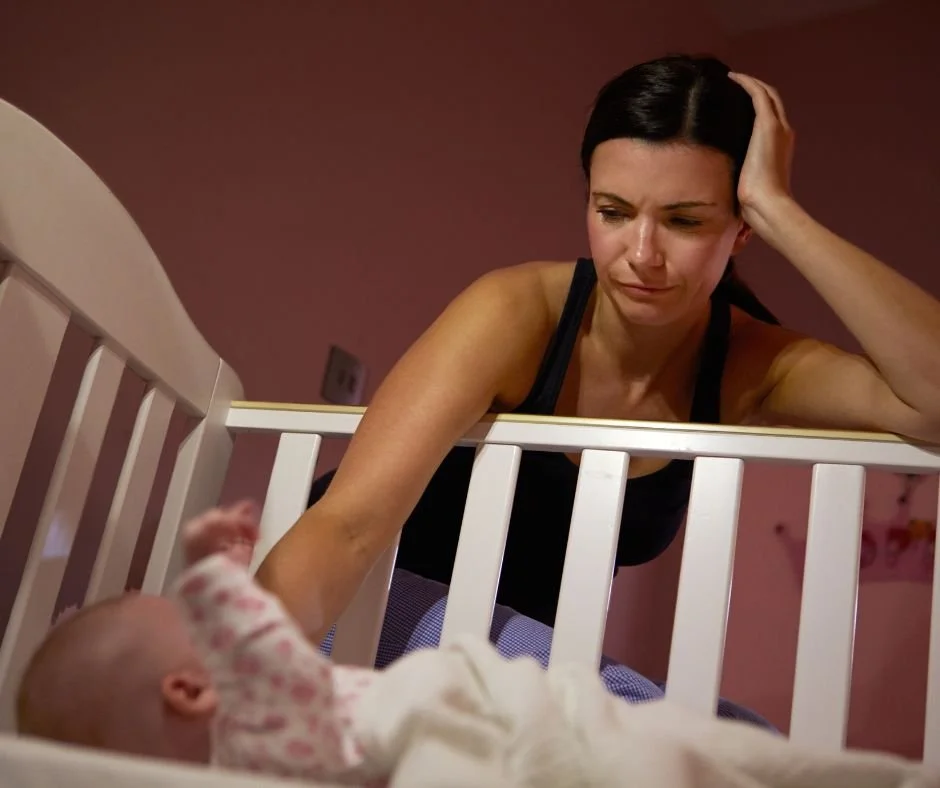
And then they wake up.
Not upset, not hungry. Just wide awake, as if bedtime was simply a warm-up nap and the real evening is only just beginning.
If this is happening night after night, it can feel completely demoralising. You're doing everything right. The bath, the feed, the song, the careful transfer. And still.
This is called a false start. And the reason it keeps happening is almost never what parents think it is.
It looks like a bedtime problem. It usually isn't.

A false start is when a baby falls asleep at bedtime and then wakes again within the first hour - usually somewhere between 20 and 60 minutes after going down. Rather than drifting into a longer stretch of sleep, they surface at the end of that first sleep cycle and can't find their way back.
It's one of the most common things parents come to me with. And one of the most misunderstood, because everything about it points to bedtime, when the real cause is usually much earlier in the day.
Before we get into causes, it helps to understand a little about how sleep actually works.
Why the first sleep cycle can be the tricky one

Sleep isn't one long continuous stretch. It's made up of cycles, each lasting roughly 45 to 50 minutes in babies. At the end of each cycle, your baby naturally surfaces into a lighter state. Most of the time they drift quietly into the next cycle. But when conditions aren't quite right, they rouse fully instead.
For your baby to sleep past that first cycle, two things need to line up. They need enough sleep pressure - the biological drive to sleep that builds across every hour of wakefulness - and their circadian rhythm, the internal body clock that governs when sleep actually feels appropriate, needs to be signalling that it's time for night sleep, not just a nap.
When those two things aren't in sync, you get a false start.
Understanding sleep pressure in more depth is covered in What time should my baby go to bed? - but the short version is this: sleep pressure builds across the day and needs to be at the right level by bedtime. Not too low, not overflowing - just right!
The most common reasons this keeps happening
Not enough sleep pressure at bedtime
This is what I see most often. If the last nap ran too long, or finished too close to bedtime, your baby arrives at bedtime without quite enough sleep pressure to carry them through that first cycle. The bedtime might feel right to you - but their body isn't ready to commit to a full night yet.
This doesn't mean keeping your baby awake longer. It means looking at the whole shape of the day: total sleep across 24 hours, when naps are landing, and whether the morning wake time is regular enough to keep everything in rhythm.
How much sleep your baby actually needs across 24 hours is something I cover in How much sleep does my baby need by age? - and it's often quite different to what the charts suggest.
A bedtime that's a little too early for this baby on this day
When the last nap has been on the longer side, or when the day has been particularly low-key, bedtime may need to be slightly later than usual to allow enough sleep pressure to build.
A large feed too close to going down
Digestion can interfere with sleep. A big milk feed or a meal right before bed can cause enough physical discomfort to pull a baby out of that first light-sleep surface. Leaving a little more of a gap between the last feed and actually going down is worth trying.
Physical discomfort
Wind, reflux, a nappy that needs changing, being too warm or too cool. All worth ruling out, particularly in younger babies. These aren't usually the main driver, but they can be enough to pull a baby fully awake when they're already in that lighter sleep at the end of a cycle.
Sensitive temperament and a world that's changed
This is the one that gets missed in almost every conversation about false starts.
Some babies are highly attuned to everything around them. For these babies, surfacing at the end of a cycle and finding the world has shifted - the warmth of your arms gone, the movement stopped, the sound of your breathing no longer nearby - is enough to bring them fully awake. Their nervous system is checking that everything is still as it was when they fell asleep.
This isn't a problem with how they fell asleep. It's simply who they are. These babies notice more. They always have. It's a temperament trait, not a sleep problem - and it means the approach needs to fit the baby, not the other way around.
If feeding to sleep or contact napping is part of your picture, Why feeding to sleep isn't the problem you've been told it is is worth a read
What actually helps

Look at the whole day first
Before changing anything about bedtime, look at what's happening in the hours before it. When did the last nap end? How much sleep has happened across the 24 hours? Is the morning wake time within a regular 30 minute window that nap timings have something to follow?
Small adjustments to nap timing - ending the last nap a little earlier, or capping it slightly shorter - are often the thing that finally shifts false starts, because they allow more sleep pressure to build in the run-up to bed.
Check the bedtime timing
Bedtime isn't a fixed number on the clock. It's the point at which sleep pressure and circadian rhythm align. For some babies on some days that might be 8:00pm. For others it might be 8:30pm. Watching for sleepy cues, rather than going purely by the clock, tends to be more reliable than any generic schedule.
What time should my baby go to bed? covers this in full if you want to go deeper.
Consider a bridge nap
If your baby is clearly exhausted by late afternoon but bedtime is still a couple of hours away, a short nap of around 15 to 20 minutes can take the edge off without filling the tank enough to delay the night. The key is keeping it short - you want to ease the pressure slightly, not reset it.
Think about the sensory environment
Some babies need the sleep environment to feel familiar when they surface between cycles. Darkness, white noise, and a steady temperature can help.
More physical activity and outdoor time during the day
For babies who are active, alert, and need plenty of input - making sure they've had enough movement and fresh air before the wind-down helps their nervous system settle more readily at bedtime.
Match the evening to your baby
The textbook bedtime routine - bath, massage, story, song - works beautifully for some babies and does absolutely nothing for others. Some actually need sensory input right before bed - movement, roughhousing, physical play - to discharge enough energy to settle. Others find any stimulation in the lead up to bedtime tips them over. Temperament shapes all of it.
Why calm matters most for baby and toddler sleep explores this in more depth.
When false starts are just a phase

Sometimes false starts appear during periods of big developmental change - when a baby is learning to crawl, stand, or walk, or during leaps in language and social awareness. When this is the cause, there usually isn't much to do except ride it out. It typically settles within a week or two.
If it's continuing well beyond that, it's worth looking more carefully at the full picture rather than assuming it will simply pass.
Sometimes a false start is just how the night begins
You can look at everything. Nap timing, bedtime, the wind-down, the sleep environment, temperament. You can make every adjustment. And for some babies, particularly those who are alert and highly attuned, a false start followed by a long stretch is simply how their night is structured.
It's your baby's pattern. And a long stretch of sleep after that first wake is a sign that there is most probably nothing to ‘fix’.
And know that it will phase out.
Ready for some support?
If you've looked at nap timing, the sleep environment, and your baby's temperament and false starts are still happening night after night, it might help to look at the whole picture together.
The Baby Sleep Builder is a good place to start. It's built around understanding your baby rather than changing them, and it can help you work out where things aren't quite fitting together.
Or if you'd prefer to talk it through, you can explore sleep support options here - including a free 15-minute discovery call if you'd like to chat before committing to anything.
You know your baby better than anyone. Sometimes you just need someone to help you make sense of what they're telling you.
Frequently asked questions
What is a false start in baby sleep?
A false start is when a baby falls asleep at bedtime and then wakes again within the first hour - usually between 20 and 60 minutes after going down. Rather than drifting into a longer stretch of sleep, they surface at the end of their first sleep cycle and fully rouse. It's very common and usually has a straightforward cause once you understand what's driving it.
Why does my baby keep waking up an hour after bedtime?
This usually comes down to sleep pressure. If your baby hasn't built up quite enough sleep drive by bedtime - because the last nap ran long or finished too recently - they fall asleep easily but wake at the end of that first cycle rather than continuing into deeper sleep. Looking at the shape of the whole day, particularly nap timing, is usually more useful than changing anything about bedtime itself.
Why does my baby wake up 30 to 45 minutes after being put down?
This timing maps almost exactly onto the end of a baby's first sleep cycle. When sleep pressure isn't quite high enough, or when there is a mismatch between the environment your baby fell asleep in and the one they wake to find, they fully rouse at that natural lighter-sleep point rather than drifting back into the next cycle.
Can feeding to sleep cause false starts?
Feeding to sleep doesn't cause false starts. Some babies who feed to sleep wake shortly after bedtime, but the feeding isn't the reason. It's far more likely to be about sleep pressure, timing, or temperament than how they fell asleep. If you're worried about feeding to sleep more broadly, Why feeding to sleep isn't the problem you've been told it is is worth a read.
How do I stop my baby from waking up after bedtime?
Start by looking at the whole day rather than just bedtime. When did the last nap end? Was it on the longer side? Is the morning wake time anchored enough to keep everything in rhythm? Small adjustments to nap timing - ending the last nap a little earlier or capping it slightly - often make more difference than anything you change at bedtime itself. For sensitive babies, temperament shapes a lot of it - read through the causes above and see what fits your baby.
Are false starts a sleep regression?
False starts can appear during developmental phases, but they aren't a regression in themselves. They have specific, identifiable causes - most commonly a sleep pressure imbalance across the day. If false starts have appeared suddenly alongside new physical skills or big developmental changes, they'll often settle within a week or two. If they've been ongoing, it's worth looking at the full 24-hour sleep picture rather than waiting for them to pass.