Why Does My Baby Wake Every Hour at Night? What's Really Going On
If your baby is waking every hour at night and you've found yourself searching this at 2am, this blog is for you.
Waking every hour is one of the hardest things to live through as a parent. It's relentless. It's disorienting. And it tends to come with a specific kind of guilt - the creeping sense that you must be doing something wrong, or that something is wrong with your baby.
So before we look at anything else, let's start there. Frequent waking does not automatically mean there is something wrong with your baby. It also doesn't automatically mean there's something wrong with what you're doing. What it usually means is that something needs a closer look. And that's exactly what we're going to do.
Why Do Babies Wake Between Sleep Cycles?

Before we get into causes, it helps to understand how baby sleep actually works - because once you do, hourly waking starts to make a lot more sense.
Babies have much shorter sleep cycles than adults, typically around 45 to 50 minutes. At the end of each cycle, they naturally surface into a lighter state of sleep. Adults do this too, but most of us drift straight back off without fully waking. Babies, particularly in the early months and during developmental periods, are far more likely to rouse fully between cycles.
This means that some degree of night waking is completely normal, at every age, and for much longer than most parents are led to believe. The question isn't usually why is my baby waking at all. It's why is my baby struggling to settle back down when they do.
That's a different question. And it leads to very different answers. If you want to understand more about how sleep actually works across the whole day, how much sleep your baby needs by age is a good place to start.
The question most parents ask - and the one I ask instead
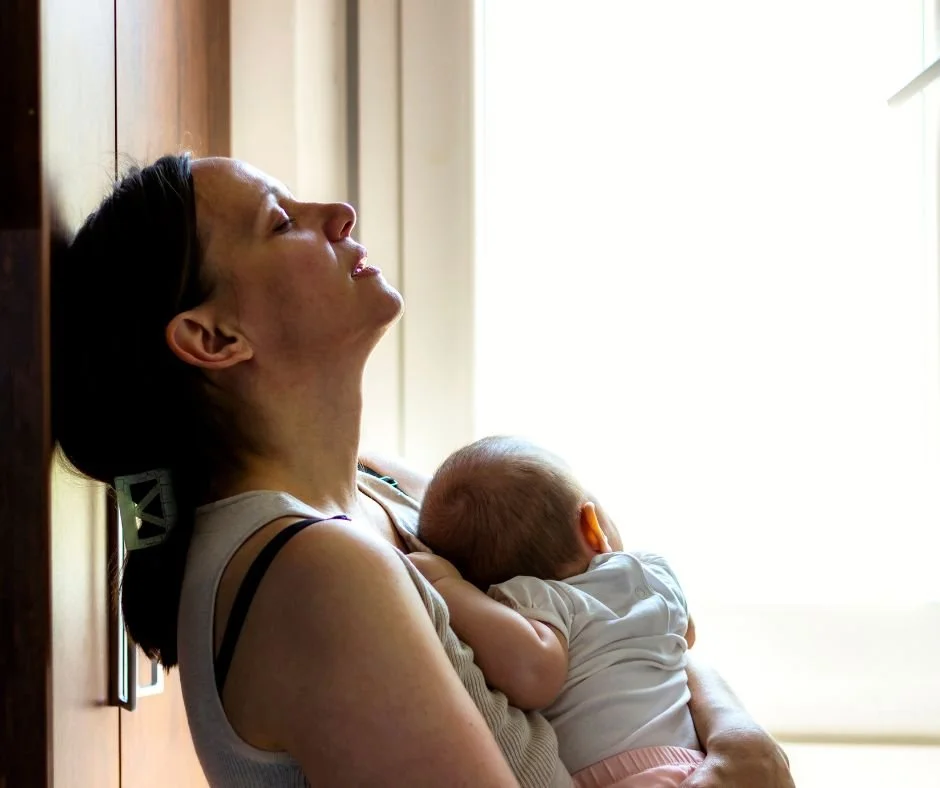
When a family comes to me with a baby waking every hour, they almost always want to know what they're doing wrong. They've usually already been told it's the feeding to sleep. Or the contact naps. Or the fact they're still going to their baby to help them resettle at night.
Sometimes those things are part of the picture. But they're often not the whole story, and in many cases, they're not the main one at all.
Rather than jumping straight to how the baby falls asleep, I step back and look at the bigger picture.
How much sleep is this baby getting across the whole 24 hours?
What is their actual sleep need?
What is happening with naps?
When are they waking in the morning?
What is their temperament?
Are there any physical things worth looking into - snoring, reflux symptoms, eczema, digestive discomfort, breathing concerns?
How long does it actually take to resettle them?
How is the whole family coping?
The most useful question I've found, for any family I work with, isn't "what's wrong with my baby?" It's this: what is my baby trying to tell me?
That small reframe changes everything. It shifts you from panic and self-blame into curiosity. And curiosity is where the answers usually live
The most common reasons babies wake every hour at night

Here's what actually comes up when I dig into the bigger picture with a family.
Too much sleep across 24 hours.
This is the one that surprises most parents, largely because they've been led to believe the generic sleep charts tell the whole story. If a baby is getting a lot of daytime sleep, or having long lie-ins after a rough night, they may simply not have enough sleep pressure built up by bedtime to sustain longer stretches overnight. The total sleep your baby needs in a 24-hour period is finite. If a big chunk of it is happening in the day, the nights often fragment.
A morning wake time that keeps shifting.
When the morning start shifts around depending on how the night went - sleeping in after a rough one, up early after a better one - the body clock can't find its rhythm. Nap timings follow the morning wake time, so when the morning drifts, the whole day drifts with it. A regular morning anchor, even when it feels like the last thing you want to do, is one of the things that tends to move the needle most. This also has a direct knock-on effect on what time your baby goes to bed - which is worth reading if bedtime feels like a moving target too.
Following sleep advice that doesn't fit this baby.
So much sleep advice is written as though all babies are the same. They are not. What works beautifully for one baby can be completely wrong for another. Grinding away at an approach that isn't built for your baby can keep you stuck for months.
Temperament.
This one doesn't get talked about nearly enough. Some babies are what researchers call signallers - they wake between sleep cycles just like any other baby, but rather than quietly drifting back off, they call out. They need their person. This isn't a flaw. It isn't a habit that needs breaking. It's just who they are. And it matters enormously when it comes to finding an approach that will actually help.
Baby waking every hour by age

Newborns (0 to 3 months). Newborn sleep is its own thing entirely. Cycles are short, feeds are frequent, and babies move in and out of light and deep sleep often. Waking regularly through the night is completely normal at this age - it's what newborn sleep is designed to look like. The focus here is on survival, not solutions!
3 to 5 months. This is where things often change. Around four months, sleep architecture matures and babies become far more aware between cycles. What felt manageable can suddenly feel relentless, seemingly overnight. If your baby seemed to sleep reasonably well as a newborn and now wakes every hour, this shift is almost certainly why. It's biology, not anything you've done.
6 to 9 months. Some babies are consolidating sleep by now, but many are still waking frequently, particularly around developmental periods. Total sleep across 24 hours, temperament, and the morning anchor all become more relevant at this age. If your baby is also waking briefly at the start of the night before settling, it's worth reading about false starts at bedtime - a separate but related pattern that often appears at this stage.
9 to 12 months. If hourly waking is still happening night after night at this age, it's worth looking carefully at total sleep, nap timing, the morning wake time, and any physical factors worth investigating.
12 months and beyond. Development is still very much part of the picture here. Big leaps in language, movement, and independence are all capable of disrupting sleep temporarily. But the bigger picture - sleep pressure, environment, and daytime rhythm - is worth looking at carefully too. If waking is persisting beyond a week or two, it's probably more than a developmental phase.
A note on sensitive babies

Some babies just experience the world very intensely. They notice everything - the noise, the light, the change in routine, the excitement of a busy day. When you have one of those babies, a lot of mainstream sleep advice stops making sense. And that's not because you're failing. It's because the advice wasn't designed with your baby in mind.
Sensitive babies, sometimes called orchid babies, are not high maintenance. They are highly attuned. They feel everything deeply. They're often incredibly affectionate, wonderfully empathetic, and completely exhausting at 2am. At night, when the world goes quiet and they surface between sleep cycles, they need reassurance that their person is still there.
These are also the babies who can't just sleep anywhere. The babies who pick up on every emotion in the room. The babies who seem to know far more than you give them credit for - and yes, the exact moment you've sat down with a hot cup of tea!
This doesn't mean hourly waking is something you simply have to accept forever. It means the approach needs to fit the baby. Generic routines and rigid schedules often make things harder for sensitive babies, not easier. Once you understand your baby's temperament, many things that looked like sleep problems start to make a whole lot more sense. If this is resonating, it's worth also reading about what happens when your baby will only sleep on you - often the same babies, the same needs.
What tends to actually help

There's no single fix for a baby waking every hour. But here's what I find tends to shift things when we work through it properly.
Looking at total sleep across 24 hours and gently adjusting nap timing so that sleep pressure is building well by bedtime. Anchoring the morning wake time so the body clock has something solid to work from day to day.
Physical activity matters, though what that looks like depends on the baby. For sensory-seeking babies - those who are always on the go, need to touch everything, and seem to thrive on input - plenty of movement, rough and tumble, and time outdoors during the day can make a real difference to how settled they are come bedtime. For sensory-avoiding babies - those who are easily overwhelmed, prefer calm environments, and can become dysregulated quickly - the focus is often on managing stimulation in the hours before sleep rather than adding more activity in.
The sleep environment is worth paying attention to. Some babies need it very dark, very quiet, and very still. Others actually settle better with a little background noise and a sense of gentle movement nearby. Noticing which one your baby is can shift things significantly.
Connection time before bed. Unhurried, undistracted time with you - on the floor, outside, reading, whatever your baby loves. A baby who goes into bedtime already feeling full of you will often settle more easily and wake less often. Not always. But often.
When hourly waking is worth investigating further

Sometimes a baby waking every hour is worth looking at from a physical angle. I always ask about snoring, noisy or mouth breathing, reflux symptoms, skin conditions like eczema, or any signs of digestive discomfort. None of these automatically explain hourly waking, but they are worth ruling out. Your GP or health visitor is the right first step if any of these are present.
It's also worth knowing that around periods of big developmental change - learning to crawl, to stand, to walk, leaps in language - sleep often fragments temporarily. This passes. But if hourly waking is continuing well beyond a week or two, it's probably more than a developmental phase, and it's worth looking at the bigger picture properly.
You don't have to just wait it out. And you don't have to sleep train.

Two of the most common things families tell me they've been advised to do are to wait it out, and to sleep train. Neither sits well with a lot of parents. And neither is the only option.
Frequent waking is normal. But normal doesn't mean nothing can help. It means finding the right support, looking at the full picture, and making changes that actually fit your baby - not changes borrowed from someone else's baby on a parenting forum at midnight.
If your baby is waking every hour and you're not sure where to start, the free resources at The Parent Rock are a good first step. If you'd like something more personalised, the Baby Sleep Builder helps you understand what's really going on and what small shifts are worth trying first.
Or if you'd like to talk it through properly, you can book a free 15-minute call here. No pressure, no agenda. Just a conversation.
You don't have to keep guessing.
Frequently asked questions
Why does my baby wake up every hour at night?
Babies have shorter sleep cycles than adults, typically around 45 to 50 minutes, and they naturally surface into a lighter state between cycles. Whether they wake fully and call out depends on a range of factors including total sleep across 24 hours, nap timing, morning wake time, temperament, and sometimes physical discomfort. Hourly waking is common and usually has more than one contributing cause.
Is it normal for a baby to wake every hour?
Yes, some degree of night waking is biologically normal at every age, and for longer than most parents expect. What varies is how easily a baby settles back between cycles, and that's where temperament, sleep pressure, daytime rhythm, and the sleep environment all play a role.
Why does my 4-month-old wake every hour?
Around four months, sleep architecture matures and babies become significantly more aware between sleep cycles. This means they're more likely to rouse fully and call out rather than drift back off. It's one of the most common periods for an increase in night waking and, while it's exhausting, it's a normal developmental shift rather than a sign that something has gone wrong.
Why does my baby wake every hour but not hungry?
If your baby is waking frequently but doesn't appear hungry, the cause is more likely to be related to sleep pressure, temperament, or the conditions they need to settle back between cycles. Some babies, particularly sensitive or highly attuned babies, simply need reassurance that their person is still there. This is not a habit that needs to be broken. It's information about what your baby needs.
Will sleep training stop my baby waking every hour?
Sleep training is not the only option, and it isn't the right fit for every baby or every family. Understanding the full picture - total sleep needs, daytime rhythm, temperament, and any physical factors worth ruling out - often reveals much more useful levers than focusing on how a baby falls asleep alone.
When should I be concerned about my baby waking every hour?
It's worth speaking to your GP or health visitor if your baby snores, breathes noisily or through their mouth, shows signs of reflux, has eczema affecting their sleep, or seems to be in discomfort at night. These don't automatically explain hourly waking, but they're worth investigating. If waking persists well beyond a week or two after a developmental leap, it's also worth looking at the bigger picture rather than assuming it will pass on its own.