Why Doesn't Standard Sleep Advice Work for My Sensitive Baby?
You've done everything right.
The routine. The dark room. The white noise. The carefully timed naps. You've read the books, followed the accounts, tried the tips that transformed everyone else's nights. Your friend did half as much and her baby sleeps twelve hours.
So you're left with the question that creeps in at 3am: if the advice works, and it isn't working for us, then the problem must be me. Or worse, my baby.
I want to offer you a different explanation. Not a new method, not a stricter routine, but the piece of the puzzle almost every sleep article skips entirely: your baby's temperament. Once you see sleep through this lens, the last few months stop looking like failure and start making complete sense.
The Short Answer: It's Temperament, Not Technique
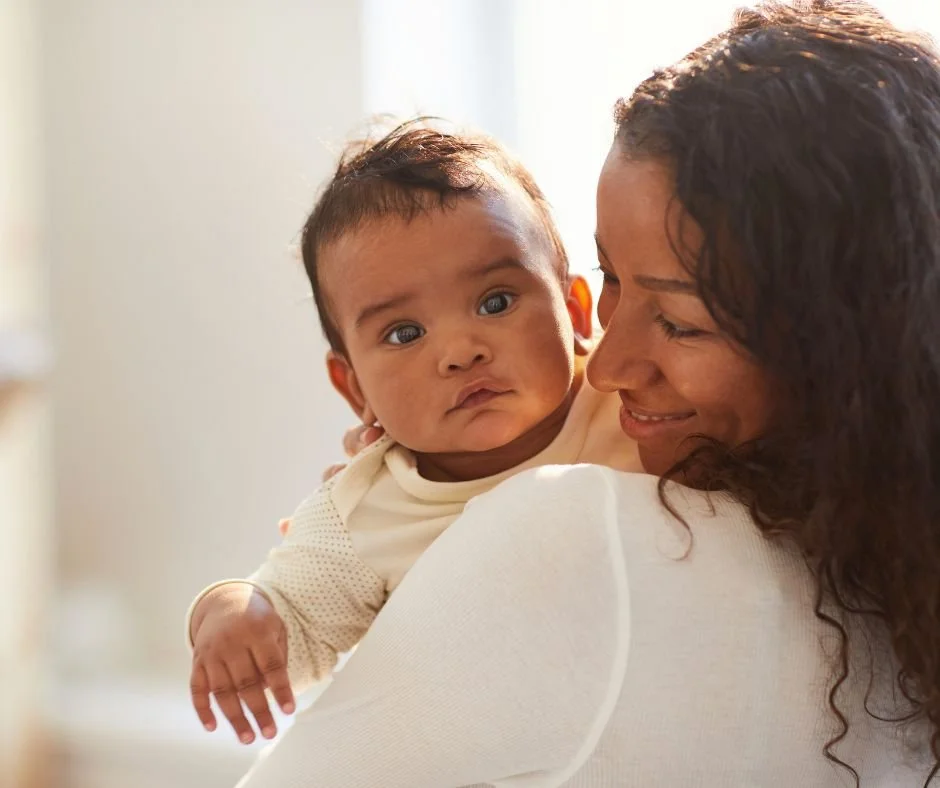
Standard sleep advice fails sensitive babies because it's written for adaptable ones.
Temperament is your baby's inborn way of experiencing and responding to the world. It's there from birth, it's substantially genetic, and it is not caused by parenting. Researchers Thomas and Chess first mapped it decades ago across nine traits, and the framework still underpins child development research today.
A baby who is highly sensitive, slow to adapt, intense and irregular experiences bedtime completely differently from a baby who is easygoing, adaptable and regular as clockwork. Same routine, same room, same loving parents. Different nervous systems, different nights.
Roughly 15 to 20 per cent of children are born with heightened sensitivity: they take in more of their environment and process it more deeply. If your baby is one of them, the mainstream playbook was never written with them in mind. The advice isn't wrong for every baby. It's wrong for yours.
If your little one is intensely alert to everything going on around them and fights sleep like it's a personal insult, my post on why some babies fight sleep and what's really behind it, is the companion piece to this one, and worth reading next.
The Nine Temperament Traits (and How Each One Shapes Sleep)
Every baby sits somewhere on each of these nine dials. There's no good or bad setting, but each one changes how sleep goes in your house.
Sensitivity
How strongly your baby registers sound, light, texture, temperature and emotion. Highly sensitive babies wake at the floorboard creak other babies sleep through, and pick up on your stress before you've said a word.
Intensity
The volume of their reactions. Intense babies don't fuss, they erupt. Bedtime protest sounds like heartbreak, which makes parents doubt everything.
Adaptability
How easily they handle change. Slow-to-adapt babies struggle with every transition, and falling asleep is the biggest transition of the day: from light to dark, together to apart, awake to asleep.
Regularity
How predictable their body clock is. Some babies feed and sleep like a timetable; others are different every single day. If your baby is irregular, rigid schedules will always feel like forcing a square peg into a round hole.
Approach and withdrawal
How they respond to anything new. A withdrawing baby treats the new cot, the new sleeping bag or the new routine with suspicion, and needs far longer to accept it.
Activity level
Busy-bodied babies fight the stillness sleep requires. They're the ones crawling laps of the cot at 9pm.
Distractibility
Highly distractible babies struggle to feed or wind down anywhere interesting, which is everywhere.
Persistence
Persistent babies don't give up, on play or on protest. This is the trait that makes "just leave them a few minutes" advice fall apart, because a persistent baby escalates rather than settles.
Mood
Some babies are sunny by default; others are more serious and take more warming up. Neither is a reflection of their happiness or your parenting.
You don't need to score your baby on all nine. Just notice which dials are turned up high, because those are the ones your sleep approach needs to respect.
Why Mainstream Sleep Advice Assumes an Adaptable Baby

Look closely at almost any popular sleep tip and you'll find a hidden assumption underneath it.
"Put them down drowsy but awake" assumes a baby with low sensitivity, who won't clock the transfer. "Stick to the schedule" assumes a regular body clock. "They'll get used to the cot in a few days" assumes fast adaptability. "A bit of grizzling and they'll drop off" assumes low persistence and low intensity.
For roughly seven or eight babies in ten, those assumptions hold well enough, which is why the advice survives and why your friends swear by it. For the sensitive, slow-to-adapt, persistent baby, every one of those assumptions is false, so every tip built on them fails.
I've watched this play out in hundreds of families. One mum followed a famous routine to the minute for six weeks; her sensitive daughter fought harder every night, because the routine kept asking her to do the thing her temperament found hardest, alone. Another family threw the schedule out entirely, followed their irregular little boy's cues day by day, fed him to sleep without apology, and everyone started sleeping more within a fortnight.
The lesson isn't that routines are bad. It's that methods don't have success rates. Babies do. A strategy only works when it fits the child it's applied to. (And if you've been wondering whether the bedtime routine itself is really the thing making the difference, I've written a closer look at what bedtime routines can and can't do for baby sleep.)
There's a darker version of this that I want to name plainly: when standard advice fails a sensitive baby, parents are usually told to apply it more firmly. Longer waits, stricter timings, more crying. Sensitive babies are the group least suited to being left to cry and the group most often subjected to it, precisely because gentler mainstream tips failed first. If that's the road you've been nudged down and it felt wrong in your bones, your instincts were right.
How to Work With Your Baby's Temperament, Not Against It

This is the practical heart of it. You're not looking for a new method to apply harder. You're matching your approach to the dials that are turned up in your baby.
For the sensitive baby: turn the world down first
Their barrier to sleep is stimulation, so the hour before bed matters more than the minute of it. Dim the lights early, soften voices, slow the pace, keep the sleep space boringly familiar. You're lowering the volume of everything their brain is monitoring so it can finally stand down.
For the slow-to-adapt baby: change one thing at a time, slowly
Whatever you'd like to shift, from where they nap to how they fall asleep, break it into the smallest possible steps and hold each step until it feels boring. Sensitive, slow-to-adapt babies can absolutely manage change; they just need it served in slices, when they're calm and well, never all at once.
For the irregular baby: follow rhythms, not clocks
Anchor the day with predictable sequences (the same order of events around naps, meals and bedtime) while letting the timings flex with your baby's cues. Sequence gives them predictability; flexibility respects their body clock. That combination beats any printed schedule.
For the intense, persistent baby: stay, and stay calm
These babies escalate when left and settle when accompanied. Your calm presence isn't a crutch, it's the mechanism: babies regulate by borrowing a regulated adult. Sit with them through the protest about the change you're making, and let your steadiness tell their nervous system what their own can't yet.
For the withdrawing baby: introduce new things beside old comforts
New cot? Let it live in your room first. New sleeping bag? Naps before nights. Pair every new thing with something deeply familiar: your presence, a feed, the same song. Familiarity is the bridge they cross into anything new.
For every temperament: keep what works, guilt-free
Feeding to sleep, contact naps, rocking, co-sleeping safely. These aren't habits that broke your baby's sleep; for a sensitive baby they're often the reason anyone in your house sleeps at all. You're allowed to keep them for as long as they serve you. If your baby will only settle on you and you've been wondering whether that's really a problem, I've written honestly about contact sleep and what it does and doesn't mean.
And if nights are still fragmenting into hourly wake-ups despite everything, my post on why babies wake every hour at night uncovers what's happening underneath.
Your Sensitive Baby Isn't a Problem to Solve
Here's the reframe I most want you to take to bed tonight.
The traits making sleep hard right now are not defects. Sensitivity is deep processing. Intensity is passion. Persistence is determination. Slow adaptation is caution and care. These are the raw ingredients of empathy, focus, loyalty and depth, and the research on sensitive "orchid" children shows they don't just struggle more in harsh environments. They flourish more than their peers in supportive ones.
Which means the responsive care you're giving, the care mainstream advice keeps telling you is too much, is exactly the environment in which a sensitive child does best. You're not failing to follow the advice. You're succeeding at something the advice doesn't measure.
There is nothing wrong with your baby. There never was. There's a nervous system that needs a bespoke approach, and a parent who cared enough to keep searching until they found it.
Want Sleep Support Built Around Your Baby's Temperament?
If you recognised your baby in those nine traits, this is exactly why I wrote The Sensitive Baby Sleep Companion: a full guide built around all nine temperament traits, with gentle troubleshooting for 32 real-life sleep scenarios, and not a hint of sleep training anywhere.
Or if you'd rather talk your baby through with me, book a free discovery call. No pressure, just a conversation.
Frequently Asked Questions
How do I know if my baby is highly sensitive?
Look for a pattern rather than one sign: waking at small sounds, big reactions to change, difficulty settling anywhere stimulating, strong startle responses, intense emotions, and unusual alertness that strangers often comment on. Around 15 to 20 per cent of children are highly sensitive. It's a temperament trait, not a condition, and it isn't caused by anything you've done.
Can I change my baby's temperament?
No, and you don't need to. Temperament is inborn and stable, but how it's expressed changes enormously with age and environment. A sensitive baby supported responsively typically becomes a child who manages their sensitivity well. Your job isn't to change the wiring; it's to work with it while your child grows into it.
Do sensitive babies sleep worse than other babies?
They tend to take longer to fall asleep, wake more fully, and need more support to resettle, especially in the first couple of years. That's a real pattern, not your imagination. It also improves as their nervous system matures, and responding to them now doesn't slow that process down.
Is a highly sensitive baby the same as a high needs baby?
The terms overlap heavily. "High needs" describes how demanding a baby's care feels; "highly sensitive" describes the deep processing usually driving it. Most high needs babies are highly sensitive. Both are descriptions of temperament, not diagnoses, and both come with real strengths as children grow.
Does sleep training work on sensitive babies?
Sensitive, persistent babies are the babies most likely to escalate rather than settle when left, and the approach asks the babies who find separation hardest to cope with the most of it. I never recommend sleep training for any baby, and for sensitive babies the mismatch is starkest. Working with their temperament gets you further, more gently.
My baby doesn't fit a schedule at all. Is that normal?
Yes. Regularity is a temperament trait, and some babies simply don't run on a predictable body clock. Instead of forcing timings, keep the order of events around sleep predictable and let the times flex with your baby's cues. Rhythm without rigidity suits irregular babies far better than any printed schedule.