Your baby's sleep was fine. Not perfect, but fine. Then somewhere around eight months, it all started to go a bit pear-shaped. Bedtime suddenly takes twice as long, the night wakings have multiplied, naps have become unpredictable, and there's a small person pulling themselves up on the cot rail at 3am looking extremely pleased with themselves.
Naturally, you've turned to Google, where you've discovered that your baby is apparently going through the dreaded 8-month sleep regression. And depending on which website you've landed on, you've probably been told that it will last anywhere from two to six weeks, that you need to be careful not to create bad sleep habits, or that now is the perfect time to teach your baby to fall asleep independently.
Well, I've got a slightly different take on all of that. Because while changes in sleep around eight months are very real, there's actually no good evidence that every baby goes through a predictable sleep regression at this age.
What we do know is that there's an awful lot happening during the second half of your baby's first year. New physical skills, increasing awareness of the world, separation anxiety and changing sleep needs can all affect how easily your baby falls asleep and how often they wake during the night. And sometimes, the explanation is much simpler than a developmental leap. Your baby might just need a little less sleep than they did a couple of months ago.
So rather than putting everything down to a regression and waiting for it to pass, let's look at what's actually happening around eight months and what you can do to help.
Is the 8-Month Sleep Regression Actually Real?

First, let's talk about the word regression, because I've never been particularly keen on it. Regression suggests that your baby has somehow gone backwards, losing skills or abilities they'd previously mastered. But when it comes to development, that's rarely what's happening.
At around eight months, babies are making enormous progress. They're becoming more mobile, developing a greater understanding of their surroundings and forming increasingly complex relationships with the people who care for them.
Research has found a relationship between the emergence of new motor skills, including crawling and pulling to stand, and changes in infant sleep. So there's certainly evidence that developmental milestones can be accompanied by more frequent waking. But that doesn't mean every baby will experience disrupted sleep at exactly eight months, or that every difficult night can be explained by development.
Some babies sail through this stage without any noticeable changes. Others experience a few unsettled nights, while some have a much more difficult time. And for a baby who was already waking frequently, there might not be any obvious change at all.
That's why I think it's far more helpful to look at what's happening for your individual baby rather than assuming they're going through something that every eight-month-old is destined to experience.
And it's not just eight months. The same misconceptions crop up at other ages too, as I explain in my blog about the so-called 6-month sleep regression.
Why Does Baby Sleep Change Around 8 Months?
1. Your baby is learning some pretty impressive new skills
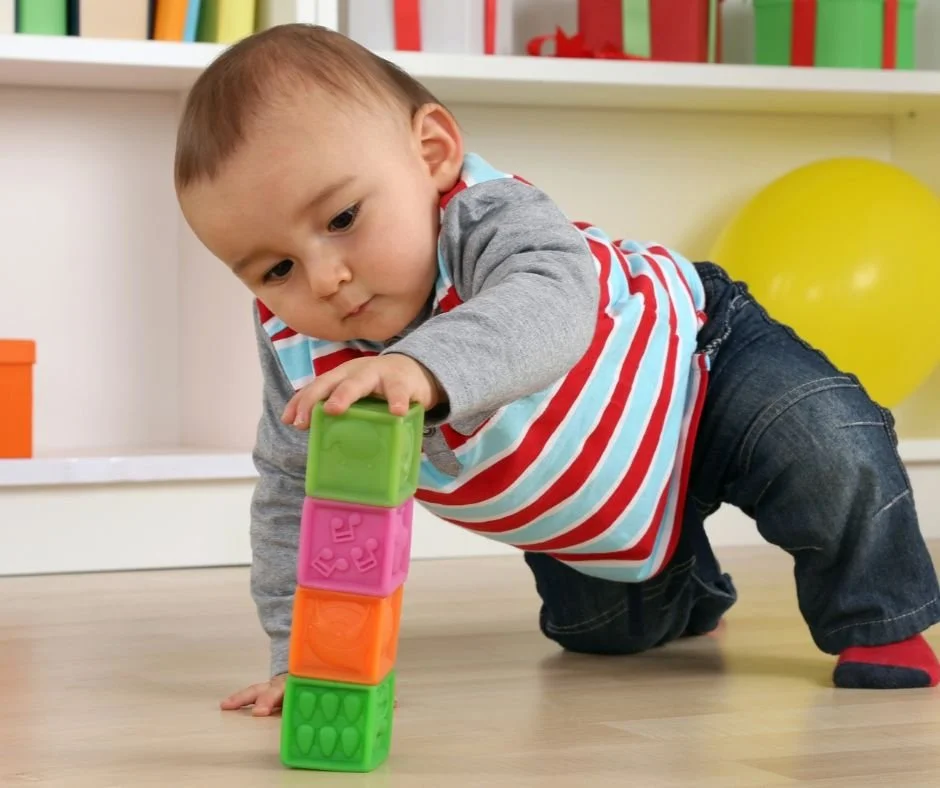
Around eight months, many babies are becoming increasingly mobile. They might be learning to crawl, getting themselves into sitting, pulling up on furniture or finding all sorts of creative ways to get into things you'd rather they left alone. And once they've discovered these exciting new abilities, they often want to practise them. A lot.
You might notice your baby becoming more interested in crawling around the room than having their afternoon nap. Or perhaps they're suddenly sitting up in their cot when you're trying to settle them. Then there are the babies who've mastered pulling themselves up to stand but haven't quite worked out how to get back down again. Which is wonderful during the day, but considerably less entertaining when you're standing beside their cot in the middle of the night.
Studies have found that the emergence of new motor skills can coincide with increased night waking and more fragmented sleep. For example, research following babies between five and eleven months found that sleep disruption was associated with the onset of crawling. Similar associations have been observed around other motor milestones, including pulling to stand.
What can help?
Give your baby plenty of opportunities to practise their new skills during the day. Lots of floor time, crawling, exploring and moving between positions can help them become more confident in what their body can do. If they're pulling themselves up to stand, spend some time helping them learn how to bend their knees and lower themselves back down safely. Because being able to stand is one thing. Knowing how to sit down again is quite another.
If they're suddenly standing in their cot at bedtime, help them back down if they're stuck and offer reassurance. It's also worth checking that their cot mattress is at the appropriate height for their new mobility, following the manufacturer's safety instructions.
2. Separation anxiety may be making an appearance

Has your previously happy-to-be-put-down baby suddenly decided that being more than three inches away from you is completely unacceptable? Perhaps they start crying the moment you leave the room, want to be held more often, or become particularly upset when you try to put them down at bedtime.
Separation anxiety is a normal part of emotional development and commonly becomes more noticeable during the second half of a baby's first year. As your baby's understanding of the world develops, they're becoming increasingly aware that you're a separate person who can leave them. Their understanding that people and objects continue to exist even when they're out of sight is also developing.
And while that's a wonderful developmental achievement, it can make separation rather difficult. Because bedtime involves separation.
Your baby might be perfectly happy playing on the floor while you're beside them, but become upset the moment you stand up to leave. They may also need more reassurance when they wake during the night. This isn't manipulation, and it certainly doesn't mean you've made your baby too dependent on you by responding to them.
What can help?
Continue responding to your baby's need for reassurance. Providing comfort and security helps them manage those feelings as their understanding develops, and feeling secure in their relationships provides an important foundation for growing confidence and independence.
During the day, simple games such as peekaboo, popping briefly out of sight and coming back, or talking to your baby when you're in another room can help them become familiar with the idea that you go away and return. At bedtime, a little extra time for connection and cuddles can help too.
Responding to separation anxiety won't necessarily make it disappear any faster, but it can help your baby feel supported while they're working through this stage. And there's no need to withdraw comfort in the hope that they'll become more independent.
3. Your baby might be ready to move from three naps to two
Now, this is something I'd be looking at quite closely if an eight-month-old suddenly started struggling with sleep.
Around this age, many babies are moving towards two naps a day, although the timing varies considerably. Some make the transition earlier, others later, and there's often a slightly awkward period when three naps seem too many but two don't quite work either.
You might find your baby has started refusing their third nap, or that it's happening so late in the afternoon that bedtime is getting pushed back. Alternatively, perhaps you've already dropped the third nap because an app told you it was time, but your baby is struggling with the longer periods awake.
The move from three naps to two changes how sleep is distributed across the day, and that can affect bedtime and night sleep. But dropping a nap doesn't automatically mean your baby needs a longer night. It depends on their individual sleep needs.
What can help?
Rather than trying to force the transition, look at what your baby is actually doing over several days. Are they regularly refusing the third nap? Are the first two naps becoming longer? Are they taking much longer to fall asleep at bedtime, or are they struggling to manage the afternoon?
Sometimes a short third nap can help bridge the gap while your baby adjusts. Other days, two naps might work perfectly well. If you're making changes, keep them small and give your baby 3–5 days, or even a full week, to adjust and see what difference they make before changing something else.
There's no prize for being the first baby in your antenatal group to drop that third nap.
4. Your baby might simply need less sleep over 24 hours

This is a big one, and something I think gets overlooked far too often when parents are told their baby is going through a sleep regression.
As babies grow, their sleep needs gradually change. And while sleep charts can give us a useful idea of what's typical at different ages, they're based on averages.
Your baby isn't an average. They're an individual, with their own sleep needs.
At eight months, some babies genuinely need considerably more sleep than others. And if your baby now needs a little less sleep than they did at five or six months, continuing to offer the same amount can sometimes cause problems.
For example, imagine your baby is having three and a half hours of daytime sleep, and you're then putting them to bed at 7pm, hoping they'll sleep until 7am. That's potentially fifteen and a half hours of sleep across 24 hours. Some babies might manage that. Others won't come anywhere close.
And if your baby only needs thirteen hours of sleep in total, those extra two and a half hours aren't going to magically appear just because a sleep schedule says they belong there.
Instead, you might find bedtime taking ages, naps becoming increasingly difficult, early morning waking or long stretches awake in the middle of the night.
This is where sleep pressure comes into the picture. Sleep pressure is the biological drive to sleep that builds while we're awake, and as babies get older, they're generally able to manage longer periods between sleeps. If your baby hasn't built up enough sleep pressure by bedtime, they're unlikely to fall asleep simply because the clock says it's time.
This can be particularly relevant if your baby seems perfectly happy at bedtime but takes ages to fall asleep, or wakes in the middle of the night and remains wide awake for a surprisingly long time. Rather than assuming they're struggling because they need more sleep, it's worth considering whether their current nap timings and bedtime still match their individual sleep needs.
What can help?
Look at your baby's total sleep across the whole 24 hours, including naps and night sleep, rather than focusing on individual wake windows or how long they're supposedly meant to sleep overnight.
If your baby is regularly taking 45 minutes to fall asleep at bedtime, could they simply need a little more time awake beforehand? If they're spending an hour wide awake in the middle of the night, could they be getting more daytime sleep than they currently need? And if they're waking at 5am after a perfectly reasonable amount of sleep, is the length of night you're expecting actually realistic?
Of course, these patterns can have other explanations too, and a baby who's had very little sleep may be tired and dysregulated rather than lacking sleep pressure.
This isn't about immediately cutting naps or keeping your baby awake for as long as possible. It's about understanding their individual sleep needs and making thoughtful adjustments where necessary.
Sometimes the answer isn't getting your baby to sleep more. It's recognising that they might not need quite as much sleep as you thought.
5. Teething, illness and discomfort can affect sleep too
Sometimes the explanation for disrupted sleep has very little to do with developmental milestones.
Teething discomfort, a blocked nose, an ear infection or another illness can all make sleep more difficult. And as babies become more mobile and start mixing with other children, there may be more opportunities to pick up coughs and colds.
It's worth considering whether anything has changed physically for your baby. Have they recently been unwell? Are they feeding differently? Do they seem uncomfortable when they're lying down? Are they showing signs of pain?
Teething can certainly cause unsettled nights, but I'd be cautious about blaming weeks of frequent waking on a tooth that hasn't made an appearance yet. If your baby seems unwell, is unusually distressed or you're concerned about their feeding, breathing or general health, speak to your GP or health visitor.
Not every sleep difficulty needs a sleep solution.
6. Your baby's temperament might be playing a part
If you've got a baby who seems to notice absolutely everything going on around them, you'll already know that getting them to switch off can sometimes feel like quite a challenge.
Some babies are naturally more alert, sensitive to changes or determined to stay involved in whatever's happening. Others seem much more adaptable and can fall asleep without too much fuss, even when life is busy.
Around eight months, as babies become increasingly mobile and interested in the world, these differences can become particularly noticeable. A highly alert baby might struggle to settle when there's lots happening around them, while a baby who's particularly sensitive to separation might need more reassurance at bedtime.
And if your baby has always been wakeful, needed plenty of contact and found settling difficult, what you're experiencing might be less about a temporary regression and more about their individual temperament.
That doesn't mean sleep can't improve. It simply means the approach needs to take your baby into account, rather than expecting them to respond in exactly the same way as somebody else's.
If this sounds familiar, I've written more about why standard sleep advice doesn't always work for sensitive babies, and why understanding your baby's temperament can make such a difference.
How Long Does the 8-Month Sleep Regression Last?
If you've been Googling this question, you've probably come across plenty of websites confidently claiming that the 8-month sleep regression lasts between two and six weeks. I'd love to tell you there's a reliable countdown you can start, but unfortunately, there isn't.
Because the 8-month sleep regression isn't a clearly defined developmental event, there's no scientifically established length for it either. How long sleep remains disrupted will depend on what's contributing to the problem.
If your baby's sleep has been affected by learning a new physical skill, things may improve as they become more confident. Separation anxiety can come and go over a longer period, while a daytime rhythm that no longer matches your baby's sleep needs may continue causing difficulties until something changes.
This is why I wouldn't automatically advise parents to sit out six weeks of difficult sleep and hope everything sorts itself out. Sometimes patience and reassurance are exactly what's needed, but sometimes there are practical adjustments that could make a difference.
What Can You Do to Help Your 8-Month-Old Sleep Better?

The first thing I'd suggest is not to panic and start changing everything at once. If your baby's sleep has suddenly become unsettled, take a few days to look at what's actually happening. Keep a note of when they're waking in the morning, how much sleep they're getting during the day, what time they're going to bed and what their night waking looks like.
There's a big difference between a baby who's waking upset and needing reassurance, one who's waking every 45 minutes, and one who's wide awake and ready for a party at 2am. Those patterns don't necessarily have the same explanation, which is why understanding what's happening is so important.
Alongside any specific changes you make, don't overlook the everyday foundations of sleep. Plenty of natural daylight, opportunities for movement and a reasonably predictable start to the day can all help support your baby's body clock. A simple, familiar bedtime routine can also help them move from the excitement of the day towards sleep without needing anything particularly elaborate.
And if your baby is going through a particularly unsettled period, I'd avoid introducing major changes unless there's a good reason to do so. For example, if you've been planning to stop night feeds, ditch the dummy or make a big change to how your baby falls asleep, it may be easier to wait until things feel a little more settled. Your baby is already dealing with quite a lot, and layering several big changes on top of one another can make things harder for everyone.
That doesn't mean you can't make small adjustments to nap timing or bedtime if something clearly isn't working, or that you have to continue with an unsustainable situation indefinitely. It's simply about choosing your moment rather than feeling pressured to overhaul everything because somebody has told you there's a regression you need to fix.
Does Your 8-Month-Old Need Sleep Training?
No. Your baby doesn't suddenly need sleep training because they've reached eight months or started waking more frequently.
Unfortunately, this is often where the advice becomes particularly unhelpful. Parents are warned not to create bad habits by offering extra comfort, particularly when their baby is going through separation anxiety.
But think about what that advice is actually suggesting. Your baby is developing a greater awareness of separation, potentially finding it more difficult when you leave, and the recommendation is to respond less? That doesn't make a great deal of sense to me.
Responding to your baby, offering reassurance and helping them feel secure are all important parts of supporting their emotional development. Feeding to sleep, rocking, cuddling or staying close while they settle aren't problems waiting to be undone.
If they're working for your family, there's no reason to stop simply because your baby has reached eight months. And if they're no longer working, that's a perfectly valid reason to look at making changes. You don't have to continue feeding your baby back to sleep ten times a night if you're completely exhausted and desperate for something different.
But I'd want to understand what's actually contributing to those frequent wakings before deciding what to change. Perhaps their daytime rhythm needs adjusting, or perhaps they need a gradual, supported change to how they fall asleep.
There are plenty of ways to improve sleep without leaving your baby to cry alone. And you don't have to choose between responding to your baby's needs and getting more sleep yourself.
When Might It Be More Than a Developmental Phase?

If your baby's sleep has been difficult for several weeks with no sign of improving, it's worth looking at the bigger picture rather than automatically putting everything down to development.
I'd be particularly interested in whether your baby is waking frequently throughout the night, taking a long time to fall asleep, having extended periods awake in the early hours or regularly waking very early in the morning. These patterns can sometimes give us clues about whether their daytime rhythm and total sleep needs are a good fit.
If your baby is waking every 45 minutes or so throughout the night, I've written more about why babies wake every hour and what might be contributing to those frequent wakings. And if they're falling asleep at bedtime but waking again shortly afterwards, my blog about false starts at bedtime looks at why this happens and what can help.
If your baby has always been particularly wakeful, alert or sensitive to changes, their temperament may be an important part of the picture too. And of course, if there are signs of illness, discomfort, feeding difficulties or anything else that concerns you, speak to your GP or health visitor.
When it comes to sleep itself, though, you don't have to wait until things become completely unbearable before asking for help.
So, Is the 8-Month Sleep Regression Real?
The changes in sleep that many parents notice around eight months are absolutely real. But the idea that every baby goes through a predictable regression at this particular age isn't supported by the evidence.
For some babies, disrupted nights may be linked to learning new physical skills or needing more reassurance during separation anxiety. For others, the transition from three naps to two, changing sleep pressure or simply needing less sleep over 24 hours may be playing a much bigger part.
The important thing is not to assume that your baby's sleep has somehow gone backwards, or that you've caused a problem by comforting them. Get curious about what's changed, look at their individual needs and remember that you don't have to make drastic changes just because sleep has become a bit wobbly.
You can respond to your baby's needs AND find ways to help the whole family get more sleep. Those two things have never been mutually exclusive, and I really wish more parents were told that.
Need Some Help Working Out What's Going On With Your Baby's Sleep?
If your eight-month-old has suddenly started waking more frequently, naps have become a guessing game or you're wondering whether their daily rhythm needs a rethink, you don't have to work it all out from Google.
As a holistic infant sleep coach, I look at the whole picture, including your baby's individual sleep needs, temperament, daytime rhythm and how they're supported to sleep. No cry-it-out, no rigid routines and absolutely no telling you that you've made a rod for your own back.
If you'd like some personalised guidance, check out my sleep support packages here and feel free to book a discovery call. We can chat about what's happening with your baby's sleep and how I might be able to help.
Frequently Asked Questions About the 8-Month Sleep Regression
Is there really an 8-month sleep regression?
There isn't good scientific evidence that all babies experience a predictable sleep regression at eight months. However, research has found that the development of new motor skills, including crawling and pulling to stand, can coincide with increased night waking. Separation anxiety, changing sleep needs, nap transitions and physical discomfort can also contribute to disrupted sleep around this age.
How long does the 8-month sleep regression last?
There's no established timeframe because the 8-month sleep regression isn't a scientifically defined developmental stage. Some babies experience a short period of disrupted sleep while learning new skills, while others have sleep difficulties that continue for longer. If your baby's sleep has been challenging for several weeks, it's worth looking at their overall sleep pattern rather than simply waiting for a regression to pass.
Why is my 8-month-old suddenly waking every two hours?
Frequent night waking at eight months can have several explanations, including developmental changes, separation anxiety, illness, discomfort or changes in daytime sleep. Looking at what happens across the whole 24 hours, including the amount and timing of naps, may help identify possible contributing factors.
Can learning to crawl or stand affect my baby's sleep?
Yes. Studies have found that the emergence of motor milestones such as crawling and pulling to stand can be associated with increased night waking and more disrupted sleep. Your baby may also find themselves sitting or standing in the cot and need help getting back down.
Should my 8-month-old be having two naps?
Many babies move from three naps to two somewhere around seven to nine months, but there's no single age when every baby needs to make that transition. If your baby is regularly refusing the third nap, taking longer naps earlier in the day or struggling to settle at bedtime, it may be worth reviewing their daytime rhythm.
Should I stop feeding my 8-month-old to sleep?
Not unless you want to make a change. Feeding to sleep is a normal way for babies to fall asleep and isn't automatically the cause of frequent night waking. If it's working for you, there's no reason to stop simply because your baby is eight months old.
Should I sleep train my baby during the 8-month sleep regression?
No, you don't need to. If your baby is particularly unsettled or experiencing separation anxiety, I'd generally avoid introducing major changes unless there's a good reason. Offering comfort and reassurance can help them feel secure, and if sleep isn't working for your family, there are gentle ways to make changes without leaving your baby to cry alone.
When should I worry that it's not just a phase?
If your baby seems unwell, is unusually distressed, has feeding or breathing difficulties, or shows signs of pain, speak to your GP or health visitor. If their sleep has been disrupted for several weeks, they're waking very frequently or spending long periods awake during the night, it's also worth looking more closely at their sleep patterns and individual needs.