Around the first birthday, sleep can go sideways.
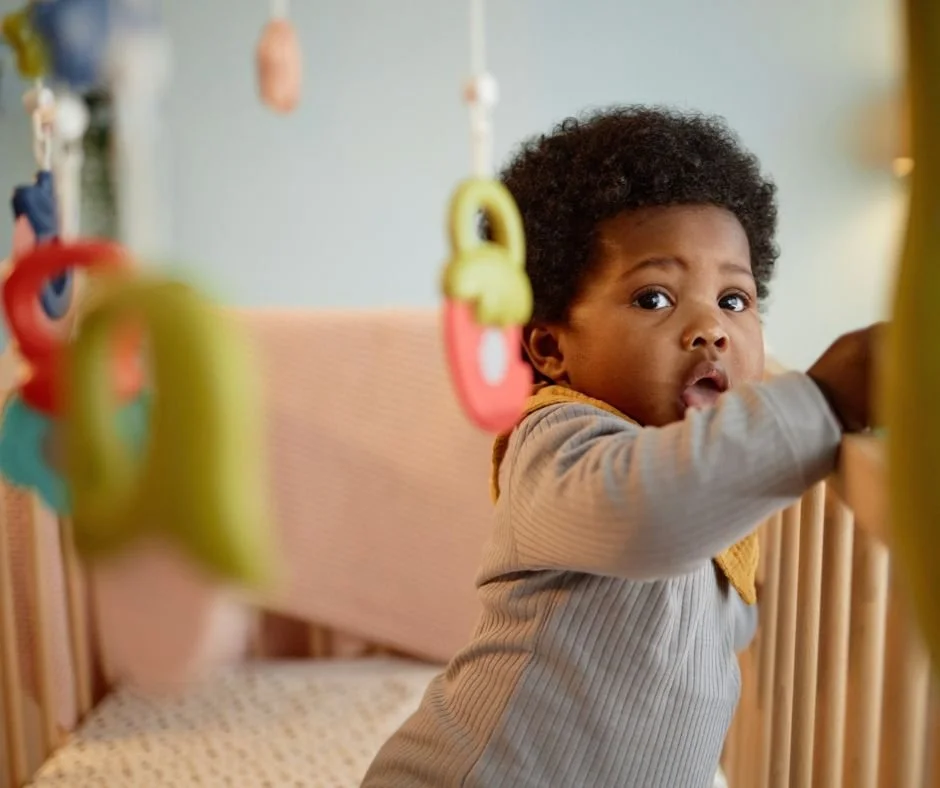
Naps get fought or refused outright. Bedtime becomes a standing event, literally, with a small person bouncing at the cot rail like it's the front row at Glastonbury. Night waking picks up.
And then the internet turns up with its diagnosis. It's the 12-month sleep regression, apparently, and it comes with a to-do list: drop a nap, stop feeding or cuddling to sleep, wait it out for a set number of weeks. Some of that advice makes the next few weeks harder, and none of it asks what has actually changed for your baby.
Is there really a 12-month sleep regression?
There is no established, predictable 12-month sleep regression.
That doesn't mean your baby's sleep hasn't changed. Plenty of babies do sleep differently around their first birthday, and if yours is one of them, the change is real. But a regression means going backwards, and a baby at this age is moving forwards in several directions at once. Calling it a regression also sends parents into waiting mode, when a few specific things are worth checking.
So rather than asking how many weeks are left, it's more useful to ask what has changed in the last fortnight, and whether your baby's day still fits the baby they are now.
What changes around the first birthday?

Often several things overlap, which is why it can feel so sudden. Not every baby is affected by every one of them, and a new skill doesn't automatically explain every waking.
New movement skills
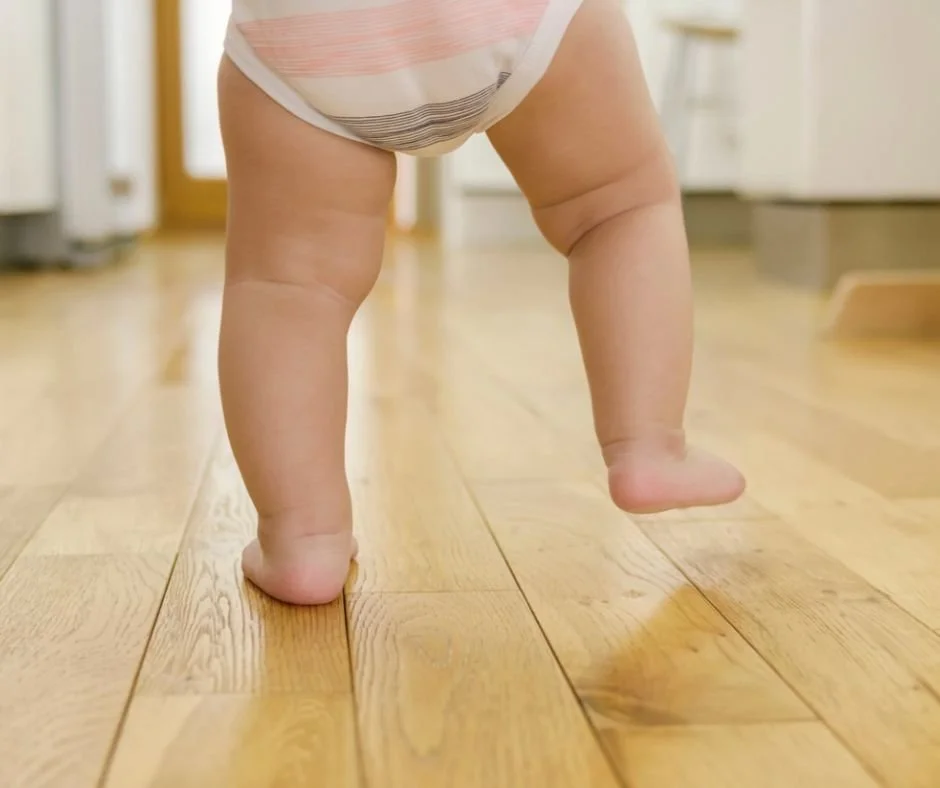
Pulling to stand, cruising and first steps take up a lot of a baby's attention, and many practise them in the cot. Some wake up, pull themselves to standing, and then can't work out how to get back down, which is a much more a frustrating discovery at 2am!
Language
First words are arriving or close, and understanding is racing ahead of speech. Some babies are more wakeful at night while this is going on, though how much varies from baby to baby.
Separation anxiety
It often shows up around this age, and bedtime signals the start of the longest separation of the day - night time.
Teeth
First molars tend to arrive around this age and can look like a sleep problem. If you're wondering about teeth, my post on teething and baby sleep covers what's likely to be teething and what isn't
Could their sleep needs be changing?
This is the one I'd look at first, and it's the one the regression label hides.
The amount of sleep a baby needs across 24 hours changes gradually as they grow, and babies differ: some need noticeably more than others. When a baby's day stops matching what they need, it can show up as nap resistance, a long wind-down at bedtime, an early start, or a stretch of being wide awake in the night. I wrote about the same idea in my post on whether there's really an 8-month sleep regression.
Say your baby was comfortably having two good naps a few weeks ago. Now the second one takes ages to start, bedtime keeps drifting later, or they wake at 2am and chat for an hour. That could mean they need a little less daytime sleep than before.
So the useful question is how your baby is across the whole day. Content and playful, or frazzled by teatime? Add up their sleep over the 24 hours rather than judging bedtime in isolation
Refusing a nap at 12 months: is it time for one nap?
This is where well-meant advice goes wrong, usually in one direction. Your baby fights a nap, someone says they're ready for just one, you make the switch, and a week or two later you have a baby who's exhausted by late afternoon and more unsettled at night.
I don't want to swap that rule for another one, though. Some babies are ready for one nap at around 12 months, particularly those who cope easily with longer stretches awake and sleep well overnight. Many need two for several more months. Published guidance on the typical age varies, with some sources putting the move to one nap as early as 10 months and others well into the second year, so your baby's pattern tells you more than their age does.
Refusing a nap and no longer needing it aren't the same thing. A refusal can come from a new skill, a change at nursery or at home, or a nap that has run long earlier in the day. A few things help you tell the difference.
How it develops
A nap transition often becomes apparent over several weeks, as your baby starts managing longer periods awake and their old nap pattern becomes increasingly difficult to fit into the day. But it isn't always a neat, gradual process, which is why looking at the wider pattern is more useful than focusing on when the refusals started.
Teatime
If your baby is still falling apart by late afternoon on a one-nap day, they probably still need the second sleep. If they're content and playful, they may be ready.
Several signs together
One bad nap, or even three, doesn't tell you much. Watch the pattern across a week or two before you decide anything.
Even once a baby is ready, it's rarely clean. Plenty manage one nap on some days and need two on others for weeks, and that's common.
In the meantime, keep offering the nap and make it low pressure. It counts wherever it happens: cot, pram, sling, car, or on your chest with a cup of tea. If you want to adjust the timing or length of a nap, change one small thing and give it three to five days before you reassess.
Before bringing bedtime earlier to compensate for a missed nap, remember that you're potentially extending the night beyond what your baby actually needs. They might be tired enough to fall asleep earlier, but that doesn't necessarily mean they'll sleep any longer overall. You could simply find yourself with a much earlier start to the day, or a long stretch awake overnight. Only if your baby is clearly struggling by late afternoon, a brief catnap of 10 to 15 minutes can help them get to bedtime. Keep it short and well away from bedtime, because a nap too close to it can make settling harder.
My post on when to drop to one nap goes through the signs in more detail
How long does it last?
There isn't a fixed length, because it isn't one event. Disruption linked to a new skill often eases over a few weeks, once standing and walking stop being exciting enough to rehearse at night. Separation feelings tend to shift more gradually.
If the problem is that your baby's daytime sleep no longer fits their needs, waiting another fortnight probably won't change much. The same goes for sleep that has been rough for several weeks with no better stretches at all. That's the point to look beyond the first birthday: at a nap schedule changed too quickly, a bedtime that has drifted later, or an illness that has lingered. Temperament matters as well. A baby who has always been alert, wakeful and very tuned in to you tends to feel these changes more, and that's a feature of how they're built, not something you caused.
Night waking at this age is common anyway. Many one-year-olds still wake at least once, and plenty don't sleep through. That's ordinary sleep at twelve months, not a sign the phase has failed to end
What helps at twelve months
Look at the whole 24 hours
Total sleep, how long settling takes, how early the day starts, and how your baby is by teatime. It tells you more than any single bedtime.
Give new skills some daytime practice
It won't stop every 3am session, but plenty of standing, cruising and stair practice by day, including getting back down from standing, gives them something to draw on when they're stuck at night. If your baby is pulling up in the cot, make sure the mattress base is adjusted to a safe height, following the manufacturer's instructions.
Put connection before bedtime
Ten minutes of full-attention floor play, an unhurried wind-down and the same order of events each night can help a baby who's very aware of separation. Peekaboo and hide-and-find games in the day can help too.
Keep responding, and keep feeding if it works
A one-year-old's need for reassurance is as real as a newborn's, whatever the "they don't need you now" chorus says. Feeding, rocking or cuddling to sleep don't need to stop because of a birthday. Responsive parenting also doesn't mean carrying on with something that's leaving you exhausted. If it has stopped working for you, you're allowed to change it, gently, and it's easier once the current upheaval has settled.
Rule out the physical
Fever, a change in feeding, or a baby who seems in pain: see your GP first and think about sleep second.
Keep nights dull
Low light, soft voice. A baby this age notices anything interesting, so the aim is to be lovingly boring.
Change one thing at a time
When sleep gets hard it's tempting to change the bedtime, the nap lengths, the settling approach and a feed all in the same week. Then you can't tell what helped. Pick the most likely cause, make a small adjustment and see what happens.
Look after your own sleep
After months of broken nights, it's hardly surprising if you're feeling exhausted. If possible, think about how you and your partner could share some of the night waking so you're not always the one getting up. And if you're struggling with your mood or finding it increasingly difficult to cope, please do reach out for some support. You matter in all of this too.
Does a one-year-old need sleep training?
No, you don't need to sleep train your one-year-old. There are plenty of reasons why sleep might become more disrupted around this age, and learning to fall asleep without support isn't necessarily the answer. How your baby falls asleep is only one part of a much bigger picture. Some babies who fall asleep independently still wake often, and some who are fed or cuddled to sleep manage long stretches overnight.
If sleep has become difficult, I'd look at your baby's sleep needs, temperament, development and daily rhythm before deciding anything needs to change about how they fall asleep. And if you do want to change something, it can be done gently and responsively.
When might it be more than a phase?
Sleep that is hourly all night, rather than clustered around practice and reassurance, is a different pattern, and my post on why babies wake every hour at night looks at the possible causes.
See your GP or health visitor if there's fever, noisy breathing, loss of appetite, or any sign of pain, or if your baby seems distressed rather than busy. And if sleep has been difficult for several weeks, or you're struggling with it most days, that alone is reason enough to ask for support. You don't have to put up with weeks of exhausting nights because someone has told you it's normal.
So, is there really a 12-month sleep regression?

Not as a predictable event that every baby goes through. What there is, is a stretch around the first birthday when a baby's days change quickly, and sleep reflects it.
When sleep goes wrong, three questions get you further than a label.
What has changed?
A new skill, a change in routine, teeth, or a baby who has become more aware of you leaving the room.
Does the day fit their sleep needs?
Across the whole 24 hours, not just at bedtime.
Is how we're supporting sleep still working for us?
Both for your baby and for you.
Answer those and you know what to adjust and what to leave alone, which beats spending a month waiting for a regression to pack its bags
Want to understand your baby's sleep more clearly?
If those three questions leave you with more questions than answers, that's the part I help with. I'm a holistic infant sleep coach, and I look at the whole picture: your baby's sleep needs across the 24 hours, their temperament, their naps and rhythm, and how they're supported to sleep. There's no cry-it-out and no rigid routine, and no expectation that your baby should sleep like somebody else's.
If you'd like to explore working together, you can take a look at my sleep support packages and book a discovery call to see which option might be right for your family. There are also free resources if you'd like to start there.
Frequently asked questions about the 12-month sleep regression
Is there really a 12-month sleep regression?
There is no established, predictable 12-month sleep regression. Many babies do sleep differently around their first birthday, because of new movement skills, language, separation anxiety and changing sleep needs. These changes are developmental progress rather than a step backwards, and they vary a lot from baby to baby.
How long does the 12-month sleep regression last?
There is no fixed length. Disruption linked to a new skill often eases over a few weeks as the skill becomes familiar. If sleep has been difficult for several weeks with no better stretches, look at naps, bedtime, illness, temperament and whether your baby's sleep across 24 hours still fits their needs.
Is my 12-month-old ready to drop to one nap?
Some babies are, but many need two naps for several more months, and published guidance on the typical age varies. A refused nap at around 12 months can reflect a new skill or a change in routine as much as readiness, so keep offering the nap and watch the pattern over a week or two. A baby who copes well with longer stretches awake and stays content through the afternoon may be ready sooner.
Could my 12-month-old simply need less sleep?
Possibly. Sleep needs across 24 hours change gradually and vary between babies. Nap resistance, a late bedtime or long wake-ups at night can mean the day's sleep no longer fits, but they can also mean a baby is short of sleep. Look at their mood across the day and their total sleep over 24 hours before changing anything.
Why does my 1-year-old keep standing up in the cot?
Because they're practising a new skill, and some can pull up but can't yet get back down. Practise standing and sitting down during the day, make sure the mattress base is adjusted to a safe height following the manufacturer's instructions, and help them down calmly at night. It usually fades as the skill becomes familiar.
Should I sleep train my 1-year-old during a sleep regression?
No. There are plenty of reasons why sleep may be more disrupted around this age, including movement, language, separation, changing sleep needs, teething or illness, and learning to fall asleep without support isn't necessarily the answer. Responsive support, daytime practice and calm, predictable nights are a kinder place to start.
Is it normal to still feed my 12-month-old to sleep or at night?
Yes. Feeding to sleep and night feeds past the first birthday are normal and can continue for as long as they work for your family. If they've stopped working for you, change them gently once the current disruption has settled.
When should I worry about my 1-year-old's sleep?
See your GP if there is fever, noisy breathing, loss of appetite or any sign of pain. Ask for sleep support if waking is hourly all night, if difficulties have gone on for several weeks, or if you're struggling t