Baby Wide Awake at 3am? Here’s What’s Really Going On
You finally got them down. You might have even had a decent stretch of sleep. And then, out of nowhere, you are back there in the dark, and they are looking at you like the day has officially started.
Wide awake. Completely alert. Not stirring, not grizzling. Properly awake.
It is one of the most disorienting parts of early parenting, and it is also one of the hardest to make sense of. Because it does not feel like a normal night waking. It feels like something has gone wrong.
But in most cases, it hasn’t. What is happening at 3am is usually a combination of biology, timing, and the structure of your baby’s day, rather than a sign that you have created a habit or made a mistake. This is what I want to walk you through.
Your Baby Isn’t Waking Randomly - There Is a Reason for That 3am Alert

Babies do not wake without reason, even when it feels completely random at that time of night. Those wide awake stretches in the early hours are usually the result of several things happening at once, rather than one single cause.
The first piece is how sleep cycles work. Babies move through lighter and deeper stages of sleep roughly every 45 to 60 minutes. At the end of each cycle, they surface briefly into a lighter phase, and it is during these moments that waking becomes much easier.
Earlier in the night, sleep pressure, the build-up of tiredness across the day, is high enough to carry them through. By the early hours, that pressure has often reduced significantly. What would have been a brief stir at 10pm becomes a full wake at 3am.
This is also why short naps are such a common pattern in the first year, because the natural end of a sleep cycle is where babies are most likely to surface. If you want to understand more about that, this post on short naps explains the same biology from a daytime angle.
Sleep pressure is one of the most overlooked factors in these wakes in the wee small hours of the morning. If your baby has had plenty of sleep overall, whether through longer naps, early bedtime, or simply meeting their total sleep needs for their age across 24 hours, there may not be enough pressure remaining to hold that last stretch of the night together.
Why Early Morning Sleep Is the Most Fragile Part of the Night

From around 3 to 5am, something else kicks in. Your baby’s body clock is already beginning to shift towards morning. Cortisol, the hormone that helps us wake and feel alert, starts to rise during this window. Sleep naturally becomes lighter. A change in temperature, a little more light coming through, or a shift in background noise that your baby would have slept straight through at midnight can be enough to fully wake them at 3am.
The sleep environment becomes particularly important in these hours. A room that stays properly dark with a consistent temperature through the night removes some of the triggers that make early morning sleep so easily broken.
There is one more piece worth mentioning here, and it is the one that tends to create the most worry. If your baby feeds, cuddles, or is rocked to sleep, they may look for that same support when they surface between cycles. This is not about bad habits or doing anything wrong. It is simply that the thing they associate with falling asleep is no longer there when they stir. At 3am, when sleep is at its lightest, that need can feel much stronger than it does earlier in the evening.
If this is happening multiple times across the night rather than just in the early hours, this post on frequent night waking goes into more detail on what else might be driving it.
3am Is Its Own Kind of Hard
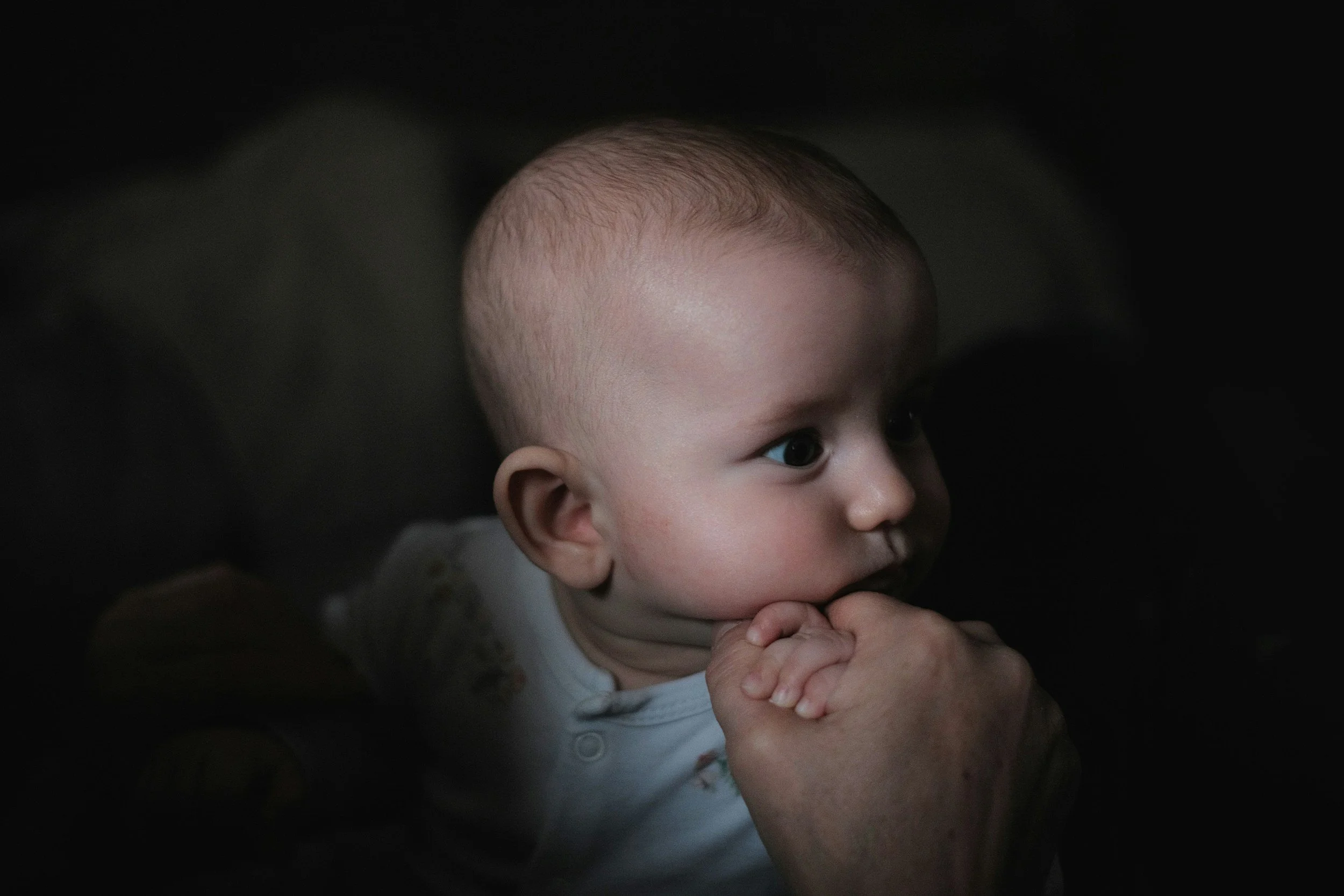
There is a piece of this that has nothing to do with sleep science and everything to do with being human.
3am is a very particular kind of hard. Your body is at its lowest ebb. Patience is thinner. Everything feels heavier and more permanent in the dark. There are no distractions, no daylight, no sense of the day moving forward.
What might feel manageable at 8pm feels impossible at 3am. And when you add a baby who is properly wide awake and showing no signs of settling, it is not just the waking that is hard. It is the timing, and the relentlessness of it.
Your experience in those moments is real. It is not an overreaction.
What Actually Helps When Your Baby Won’t Settle at 3am

The honest answer is that 3am wake-ups are rarely solved in the moment. They are usually shaped by what is happening across the whole day and night.
Start with the rhythm of the day. If your baby is regularly waking fully in the early hours, it is worth looking at how sleep is spread across 24 hours. This might mean noticing whether the first nap is happening quite early, whether naps are running long, or whether bedtime is very early. These things can all reduce the amount of sleep pressure available to hold that final stretch together. Small adjustments, like nudging a nap slightly later or reviewing overall daytime sleep, can make a real difference over time.
This post on nap counts and timing is a helpful starting point.
Consider the morning anchor. It feels counterintuitive after a rough night, but allowing your baby to sleep in after a 3am wake can reinforce the pattern by shifting the whole day earlier. Keeping the morning wake time within a regular window of around 30 minutes, helps stabilise the body clock. There is more on how bedtime and morning timing interact in this post on baby bedtimes.
Look at the sleep environment. Proper darkness and a consistent room temperature have a bigger impact in those early hours than at any other point in the night. These are small, practical changes worth checking before anything else.
In the moment, calm is the most powerful tool you have. When a baby is wide awake, the instinct is to get them back to sleep as quickly as possible. But keeping things low-stimulation, quiet, and predictable gives their system the best chance of settling again. Whatever you are doing to help them, feeding, holding, rocking, is not a problem that needs removing at 3am. It is a tool. Changes to settling, if you want to make them, tend to work best when they are gradual and introduced during the day or at the start of the night, not at 3am.
If 3am is also turning into a long wakeful stretch before your baby resettles, that pattern can look a lot like a split night.
This post on split nights explains what is behind it and why waiting it out does not always wor
This Is Rarely Just One Thing

A baby being wide awake at 3am is not a sign that something has gone wrong. It is not a habit you have created, and it is not something you can engineer your way out of with a stricter approach.
It is usually a few small things stacking up in a way that is hard to see when you are living it. Sleep pressure, body clock rhythms, the structure of the day, the sleep environment, and how your baby settles to sleep. When these things are slightly out of balance, the early hours are where it tends to show.
Understanding what is driving it is the most useful place to start. That is where things actually begin to shift.
Want to Understand Your Baby’s Sleep More Clearly?
If you are not sure where to start, my free sleep resources are a good first step, including a gentle guide to the foundations that actually support better sleep.
If you want a clearer picture of your baby’s patterns and a simple way to build more rhythm without rigid routines, the Baby Sleep Builder walks you through it step by step.
And if you’d rather talk it through properly, you are very welcome to book a free discovery call here. Sometimes having someone look at the full picture with you makes everything click into place much more quickly.
Frequently Asked Questions
Why is my baby wide awake at 3am?
Wide awake periods at 3am are usually caused by a combination of reduced sleep pressure, the natural end of a sleep cycle, and cortisol beginning to rise in preparation for morning. From around 3am onwards, sleep naturally becomes lighter, which means normal stirrings are more likely to become full wake-ups. It is usually a biological and circadian pattern rather than a behavioural problem.
Is it normal for a baby to wake up at 3am?
Yes, very common. Waking in the early hours is part of normal infant sleep, particularly when sleep pressure has reduced overnight and the body clock is beginning to shift towards morning. Many babies go through phases of early morning waking, and it is rarely a sign that anything is wrong.
How do I get my baby back to sleep at 3am?
In the moment, keeping things low-stimulation, calm, and predictable gives your baby the best chance of resettling. Feeding, holding, or rocking back to sleep are all reasonable responses. Longer term, looking at nap timings, total daytime sleep, and the sleep environment tends to have more impact than anything you do in that 3am window itself.
Why does my baby wake at 3am and then stay awake for hours?
This often points to a split night pattern, where sleep pressure has depleted enough that the body clock is treating 3am as a natural end to the night. It can be linked to too much daytime sleep, a very early bedtime, or a first nap that starts early in the morning. Reviewing the overall structure of sleep across 24 hours is usually the most helpful place to start. My Split Nights Guide is a great starting point.
How long does the 3am wake-up phase last?
This varies depending on what is driving it. If it is linked to a developmental phase, it often settles within a week or two. If it is related to sleep pressure and daily timing, it may continue until those patterns shift. Gentle adjustments to nap timing and keeping a regular morning wake time can help move things along.
Will sleep training fix early morning waking?
Not necessarily. Early morning waking is often a biological and circadian pattern rather than a settling issue, which means sleep training does not always address the root cause. Looking at sleep pressure, nap timing, and the sleep environment tends to be more effective for persistent 3am waking.