How to Get Your Baby to Sleep Through the Night Without Sleep Training
Every night at 3am, a tired parent somewhere is searching those exact words. And every time, they get the same answer back. Stricter schedules. Tighter wake windows. Methods that involve leaving their baby to cry.
What if the problem isn't your baby at all?
Because here's what nobody tells you when you're in the thick of it: sleeping through the night is not something you teach a baby to do. It's something that develops. And for many babies, the conditions that support longer sleep have nothing to do with sleep training and everything to do with foundations you can gently build right now.
This post is for parents who want better nights without leaving their baby to cry. I'm going to walk you through what sleeping through the night actually means, why your baby wakes, what you can genuinely influence, and how to support longer sleep in a way that works with your baby's biology rather than against it.
What Does 'Sleeping Through the Night' Actually Mean?
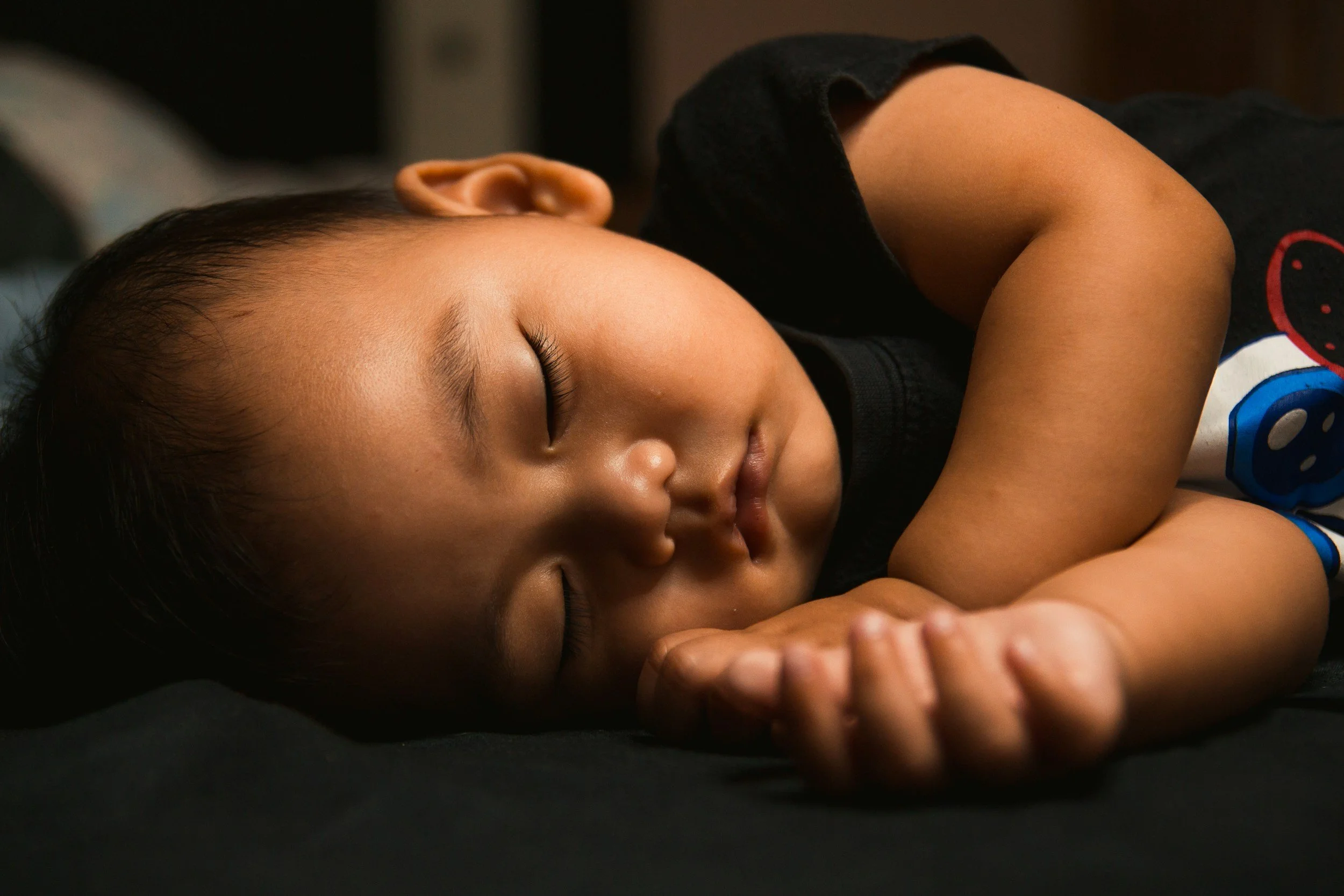
Before anything else, let's establish what we're actually aiming for. Because sleeping through the night means something very different to a sleep researcher than it does to an exhausted parent who just wants more than two hours in a row.
The clinical definition is five to six unbroken hours. That's it. Not 7pm to 7am. Five hours. Which means plenty of babies who go down at 8pm and wake at 2am are already technically sleeping through the night - their parents just don't know it.
More importantly, most babies don't consolidate their sleep into one long unbroken stretch until somewhere between six months and two years. That's an enormous developmental window. And even within it, sleep is rarely linear. A baby who sleeps beautifully at seven months may wake more at ten months, and that is entirely, boringly normal.
If you've been measuring your baby against 'sleeping through by four months' or 'twelve hours by twelve months,' take a breath. Those milestones are marketing, not medicine.
Is Your Baby Waking Too Much, or Is This Just Biology?
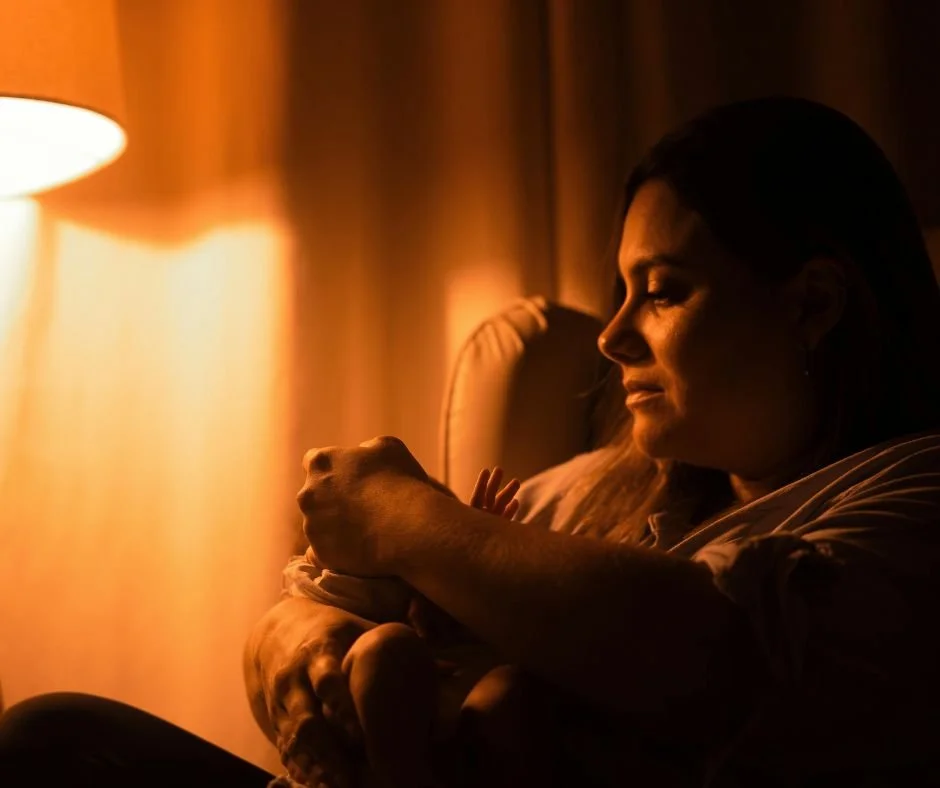
Night waking in babies is biologically normal. It is not a sign of bad parenting. It is not a habit you accidentally created. It is a feature of infant sleep architecture that has kept babies safe for thousands of years.
Babies have shorter sleep cycles than adults - roughly 45 to 50 minutes compared to our 90. At the end of each cycle, they naturally rouse. Whether they settle themselves back to sleep or fully wake depends on a combination of factors: their developmental stage, their sleep pressure, their body temperature, whether they're hungry, and the associations they've built around falling asleep.
If you're in the thick of waking every hour right now, this post goes deeper into why that happens and what it means.
The nervous system plays a huge role here. A baby with a calm, regulated nervous system going into sleep is far more likely to settle between cycles than one who is stimulated or dysregulated at bedtime. This is not about controlling your baby's behaviour. It is about supporting their biology.
Frequent night waking isn't a problem to solve. It's information. And once you understand what that information is telling you, you can respond in a way that actually makes a difference.
What You Can Actually Control When It Comes to Baby Sleep

Here is where I want to offer you something more useful than a list of tips. A lot of sleep advice asks you to control things that are genuinely outside your influence - your baby's sleep cycles, their developmental stage, their temperament. Trying to control those things is exhausting. I wrote a whole post on what you can and can't actually control in baby sleep, and it's worth a read alongside this one. The short version: focus on the environment and conditions that support sleep.
Light and darkness are the most powerful environmental cues for the circadian rhythm - your baby's internal body clock, which begins to mature from around six to eight weeks. A properly dark room for sleep and bright natural light in the morning are among the most impactful things you can do. This is biology, not routine-policing.
Sleep pressure is the accumulation of a chemical called adenosine in the brain - essentially, how tired the body is. Too little wakefulness before sleep means low sleep pressure and a shorter, more fragile sleep. Too much, and the nervous system can become dysregulated, making settling harder. Getting the balance right for your baby's age matters.
Room temperature is one most parents don't think about. A slightly cooler room (around 16 to 20 degrees Celsius) supports the natural drop in core body temperature that signals sleep onset. A baby who is too warm will rouse more frequently.
Your own calm matters more than any technique. Co-regulation - the process of a calm adult nervous system helping to settle an activated one - is one of the most powerful tools you have. When you go into bedtime calm and confident, your baby feels that.
How to Help Your Baby Sleep Longer Stretches Without Sleep Training

This is the part you've been waiting for. And I want to be straightforward with you: there are no guarantees, no universal timelines, and no magic. What there is, is a set of gentle, consistent foundations that support your baby's biology and create the conditions for longer sleep to develop naturally.
Start with the sleep environment. Dark, cool, with white noise if it helps. Remove stimulating toys and lights from the sleep space. Keep the bedroom associated with sleep rather than play.
Build a predictable wind-down sequence. Not a rigid routine with minute-by-minute timing - a predictable sequence of calm, connection-based activities before sleep. A bath, a feed, a dim room, a song. The sequence matters more than the clock. Your baby's nervous system learns through repetition, and a predictable wind-down signals: sleep is coming.
Look at the balance of daytime sleep. Too much daytime sleep can reduce the sleep pressure that drives consolidated night sleep. If wake windows have ever left you feeling more confused than helped, this post explains a gentler way to think about sleep pressure without the rigid timing.
Offer a pause before going in at night. Not to leave your baby crying - simply to give them a brief moment before you respond. Many babies who rouse between sleep cycles will settle again in 30 to 60 seconds with no intervention at all. Pausing means you aren't inadvertently interrupting a natural re-settling process.
Think about feeding with nuance. Feeding to sleep is a perfectly valid sleep association and works beautifully for many families. More on that in the next section.
Be predictable, not rigid. Predictability in your overall approach builds your baby’s sense of security. Rigid rule-following does not. Trust your instincts when the generic advice doesn’t fit your baby, because it often doesn’t.
Does Feeding to Sleep Stop Babies from Sleeping Through the Night?

This is one of the most common questions I get, and there's a lot of unhelpful noise around it. So let's be clear.
Feeding to sleep is a valid, effective, and biologically normal sleep association. Breast milk in particular is designed to support sleep - it contains tryptophan, a natural precursor to melatonin. For many families, it works beautifully.
If your baby is feeding back to sleep multiple times a night and you'd like to reduce that, the association can be shifted gently over time without any crying. But if it's working for you, it doesn't need changing.
I go into a lot more detail on all of this in my post Is Feeding to Sleep a Bad Habit? - including what to do if you do want to shift things, gently.
Don't let anyone use feeding to sleep as a reason to tell you something is broken. It isn't.
What a Gentle Bedtime Routine Actually Looks Like
A gentle bedtime routine doesn't need to be complicated. It needs to be predictable, calm, and connected. If you're also trying to work out what time your baby should actually be going to bed, that post is worth reading alongside this one, because the timing and the sequence work together.
From around 30 to 45 minutes before the intended sleep time, begin to dim the lights and reduce stimulation. Move away from screens, loud music, and high-energy activity. This shift in environment signals to your baby's brain that the day is winding down.
A warm bath is optional - the drop in body temperature after a warm bath supports the body's natural sleep signals. Follow the bath with a feed, a short book or song, and into the sleep space.
The key is keeping the sequence predictable night to night. Over time, the routine itself begins to cue sleepiness, which is exactly what you're working towards.
When Will My Baby Sleep Through the Night on Their Own?
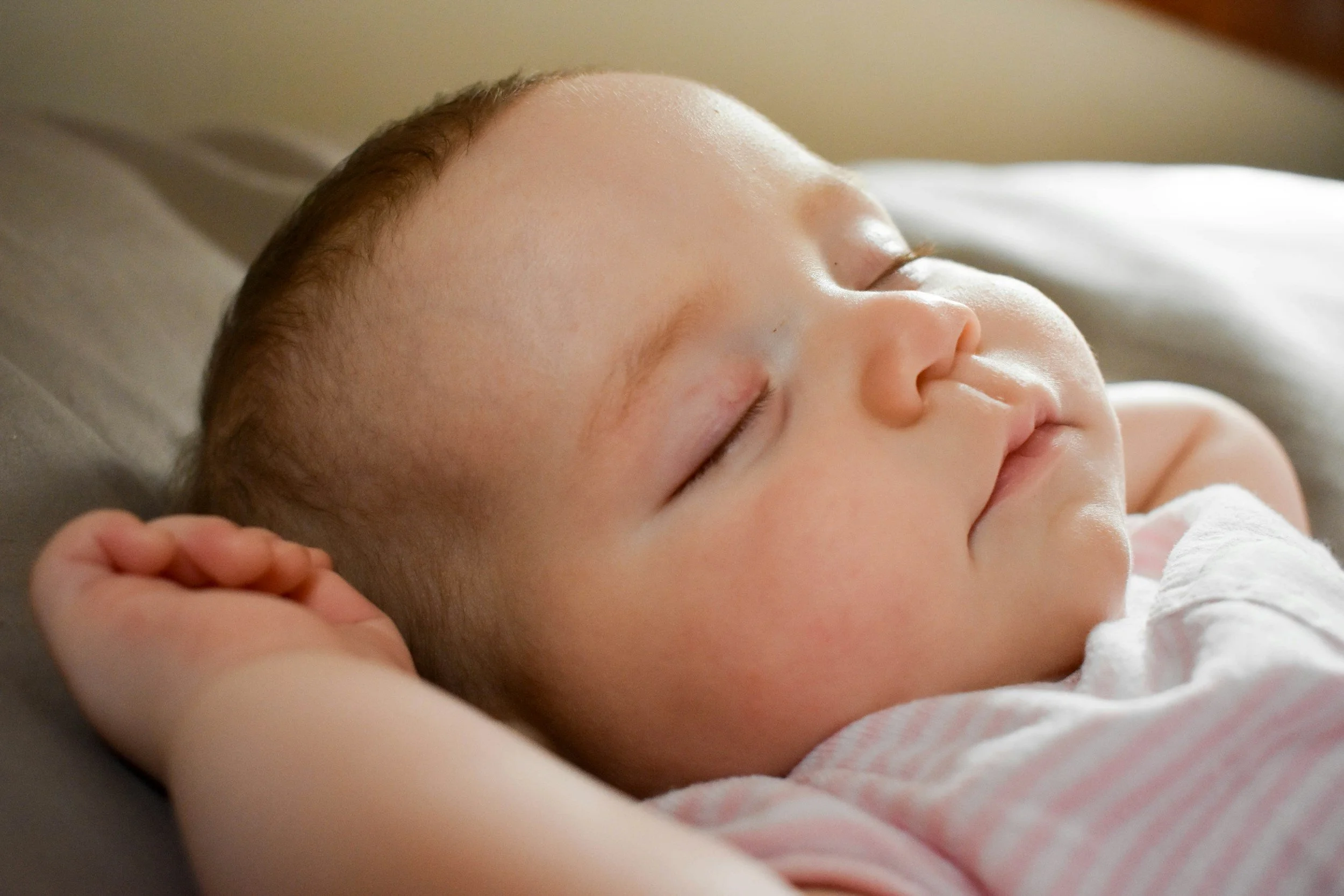
This is the question every tired parent wants answered. And the honest answer is: it varies enormously.
Most babies show meaningful improvements in night sleep somewhere between six and twelve months, as the circadian rhythm matures, sleep pressure increases, and the nervous system becomes better equipped to settle between cycles. But there are children who continue to wake through the second year and beyond — not because anything is wrong, but because they are within the normal range of human development.
What tends to bring sleep together is not a method or a technique, but a combination of developmental readiness, consistent foundations, and a nervous system that has been supported rather than stressed.
If your baby is under six months, the most valuable thing you can do right now is focus on the environment and the wind-down — not on outcomes. You are laying foundations that matter.
If your baby is older and the night waking is significantly disrupting your family, gentle support is available. It doesn't have to involve leaving your baby to cry.
Do Babies Always Sleep Through the Night Eventually Without Sleep Training?

Yes. The vast majority of children, given time and supportive conditions, consolidate their sleep without any formal sleep training method. Research consistently shows that infant sleep matures naturally over the first two years, and that gentle, responsive parenting does not prevent that maturation from happening.
What sleep training does is accelerate a process that is already occurring. Whether that acceleration is necessary or worthwhile is a decision only you can make for your family — and both paths are valid. But if you've been led to believe that sleep training is the only way your baby will ever sleep through the night, that simply is not true.
Your baby will get there. And you can support that process without compromising the connection between you.
A Final Thought
The question 'how do I get my baby to sleep through the night?' so often comes from a place of real desperation. And that desperation deserves to be met with honesty, not a list of promises.
Sleep is not a performance your baby is failing. Night waking is not evidence that you've done something wrong. And gentle parenting and good sleep are not in conflict — they are deeply compatible.
The work of supporting your baby's sleep is slower than the promise of a method. It requires more trust in the process. But it is gentler on your baby, gentler on you, and built on foundations that last.
Ready to understand your baby's patterns?
The Baby Sleep Builder helps you make sense of your baby's sleep, identify what's driving the night waking, and build a gentle rhythm that works for your family — no sleep training involved.
Or if you'd like to start with something free, head to theparentrock.com/free-resources and take it from there.
Frequently Asked Baby Sleep Questions
Is it possible to get a baby to sleep through the night without sleep training?
Yes. The vast majority of babies consolidate their sleep naturally over time without any formal sleep training. Gentle foundations, including a dark sleep environment, a predictable wind-down routine, and attention to the balance of daytime sleep, support the biological conditions for longer night sleep to develop.
What age do babies sleep through the night without sleep training?
Most babies begin to show meaningful improvements in night sleep between six and twelve months, as their circadian rhythm matures and sleep pressure increases. However, there is a wide normal range - some babies consolidate their sleep earlier, some later, and many continue to wake through the second year. This does not indicate a problem; it reflects the natural variation in infant sleep development.
Why does my baby wake up every hour at night?
Babies have shorter sleep cycles than adults - roughly 45 to 50 minutes. At the end of each cycle, they naturally rouse. Whether they settle back to sleep or fully wake depends on factors including their developmental stage, sleep pressure, room temperature, and the associations they have built around sleep. Frequent waking is biologically normal and not a sign that anything is wrong. However, it is always a good idea to rule out any red flags with such frequent wakes - things like discomfort, illness, reflux, or anything else that feels out of the ordinary for your baby.
What is the gentlest way to help my baby sleep longer stretches?
The gentlest approach involves supporting the biological conditions for sleep rather than teaching a behaviour. This includes a dark, cool sleep environment, a predictable and calm wind-down routine, an appropriate balance of daytime sleep, and supporting your baby's nervous system through co-regulation and connection at bedtime. These foundations take time but work with your baby's biology rather than against it.
Can feeding to sleep prevent a baby from sleeping through the night?
Feeding to sleep is a valid, effective, and biologically normal sleep association. For many families it works beautifully. If a baby needs to feed multiple times a night to resettle and the family would like to reduce this, the association can be gently shifted over time without any crying. Feeding to sleep does not damage sleep development and does not need to be stopped unless it is causing a problem for your family.
Does a bedtime routine help babies sleep through the night?
A predictable wind-down routine is one of the most impactful gentle tools available to parents. A sequence of calm activities - such as a bath, a feed, and a song - helps your baby's nervous system anticipate sleep. Over time, the routine itself begins to cue sleepiness. The key is predictability and calm, not a strict timetable.
How long does it take for a baby to sleep through the night naturally?
There is no universal timeline. Significant improvements often occur between six and twelve months as developmental changes support longer sleep. Some children continue to wake through the second year and beyond - this is within the normal range of infant and toddler development. Supportive foundations can encourage the process, but development cannot be rushed.