Do I Have to Sleep Train My Baby? Understanding Your Options When You’re Exhausted
When sleep is broken for weeks, months or even months on end, most parents reach a point where they start asking themselves some fairly big questions. Not because they want to change how they parent, but because exhaustion has a way of narrowing your world until all you can think about is how to get through the next night.
For many families, it can begin to feel as though there are only two options on the table - sleep train, or do nothing and wait for time to work its magic. The advice parents hear is often confident and absolute, and usually delivered by people for whom things worked out relatively smoothly. That can leave exhausted parents feeling boxed in, as though they’re expected to follow a particular path even if it doesn’t sit comfortably.
In reality, baby sleep is more nuanced than that. Parents deserve to understand their options properly, so they can decide what fits their baby, their values, and their capacity at this point in time. If you’ve ever felt overwhelmed by pressure, comparison, or expectations around baby sleep, this links closely with what I’ve written before about new-year baby sleep pressure and finding a kinder way to think about sleep goals – because sleep decisions rarely exist in isolation.
Broadly speaking, most families find themselves considering one of three approaches.
Sleep training

Sleep training is often spoken about as a rite of passage - something parents eventually have to do if they want better sleep. Many families arrive here not because it feels right, but because it’s framed as inevitable, or because they’ve reached the end of their tether and can’t see another way forward.
That framing matters. When sleep training is presented as the thing you have to do, parents can feel pushed into trying it before they’ve had the chance to really understand their baby’s sleep or explore whether a different approach might suit them better.
There are situations where sleep training can bring relatively quick changes, particularly for babies who are more easy-going and adaptable by nature. For some families, things settle and stay settled, and those experiences tend to be shared confidently. You’ll often hear, “We did it once and it worked brilliantly.”
What’s discussed far less openly is that baby sleep isn’t linear. Illness, teething, developmental leaps, separation anxiety, and big changes can all cause sleep to wobble again. If you’ve experienced this already, it may echo what I’ve shared in Sleep setbacks - how to handle baby sleep challenges with confidence, because sleep changing doesn’t mean something has gone wrong.
When sleep unravels, parents who haven’t been supported to understand why their baby wakes often feel stuck. They’re left wondering whether they need to repeat the process, why it’s stopped working, or whether they’ve somehow undone the progress they made.
One of the biggest reasons sleep training feels straightforward for some families and deeply distressing for others is temperament. Some babies adapt quickly to change, protest briefly, and resettle with relative ease. Others experience change much more intensely and may escalate rather than settle, becoming highly distressed or even vomiting when overwhelmed.
When sleep training doesn’t work for these babies, parents are frequently told they weren’t consistent enough, that they intervened too soon, or that they need to try again. That’s deeply unfair, because what’s often being labelled as a parenting problem is actually a baby difference. The outcome isn’t a reflection of effort, commitment, or love.
It’s also worth acknowledging that for some families, sleep training is chosen in crisis. When a parent’s mental health is suffering, when exhaustion feels unmanageable, or when safety becomes a concern, families are often reaching for the option that promises the fastest change. That isn’t a failure or a lack of care. It’s a response to very real pressure, in very real circumstances.
Waiting it out
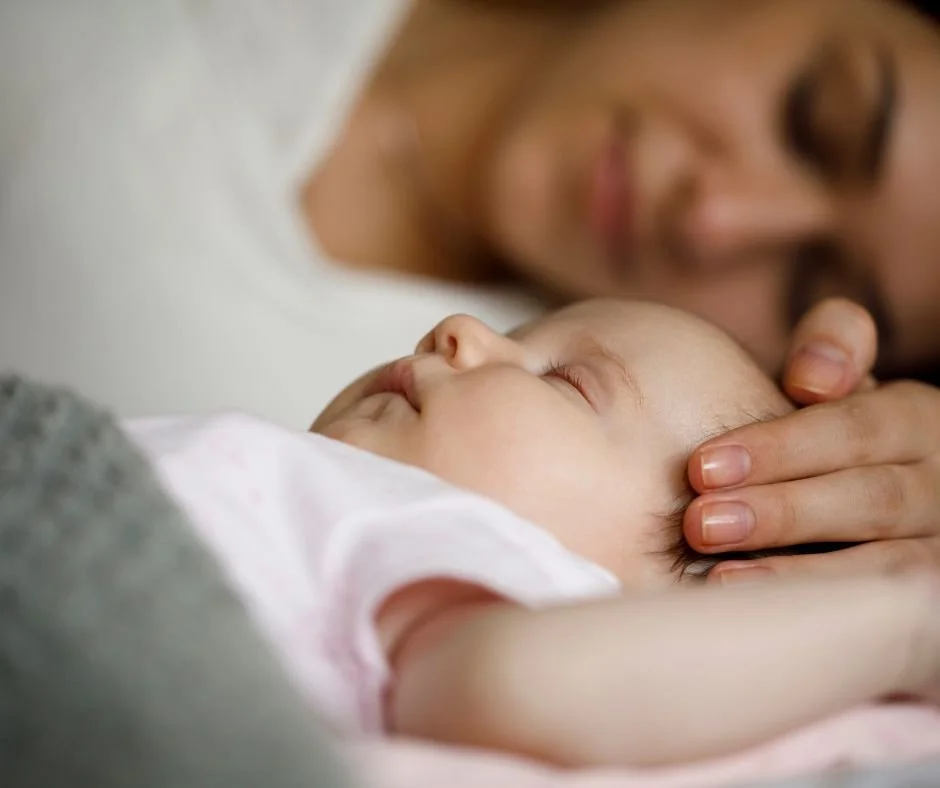
Some parents decide not to change anything and instead wait for sleep to improve naturally over time. This approach is often instinct-led and rooted in trust that development will unfold as it’s meant to.
For many families, waiting it out feels emotionally safer. It avoids forcing change before it feels right and allows sleep to evolve alongside a baby’s development. And for plenty of babies, sleep does gradually improve as they grow.
The difficulty is that waiting it out can come at a cost. Long-term broken sleep can take a toll on a parent’s mental health, relationships, and ability to cope day to day. Parents can find themselves caught between loving their baby deeply and feeling increasingly depleted, with no clear sense of whether things will ease soon or continue as they are.
Often, parents wait it out not because it feels sustainable, but because they don’t believe there’s another option that aligns with their values - particularly if they’ve already lost confidence in their instincts.
This is something I explore more deeply in how to feel more confident about baby sleep without sleep training or guilt, because confidence plays a huge role in how supported parents feel in their decisions.
A gentle, holistic approach

There is a third path that often gets lost in baby sleep conversations - a gentle, holistic approach that focuses on understanding why a baby wakes, rather than trying to eliminate waking altogether.
This approach looks at sleep through a much wider lens, taking into account biology, nervous system regulation, temperament, feeding, daily rhythm, and the emotional experience of both baby and parent. The aim isn’t to force independence or push through distress, but to support sleep in a way that feels calm, responsive, and sustainable over time.
For many families, this offers a genuine middle ground. Changes tend to be gradual and flexible, shaped around the individual baby rather than a fixed method. Parents are supported to notice patterns, cues, and rhythms, which means that when sleep inevitably wobbles, as it does for all children, those changes feel far less alarming.
One of the most important aspects of this approach is the understanding it gives parents. Baby and child sleep isn’t something that gets “sorted” once and never changes again. Sleep will unravel at points through illness, development, emotional leaps, separation, big life changes, and growth. When parents understand why sleep shifts, those moments don’t trigger panic or self-blame. Instead of feeling they’ve broken something or gone backwards, they can respond with curiosity and confidence, knowing that sleep naturally ebbs and flows.
Over time, this understanding becomes more valuable than any single technique. It allows parents to support sleep not just in infancy, but through toddlerhood and childhood too, without repeatedly feeling back at square one or believing they need to start over each time something changes. It’s an approach that supports sleep across a lifetime, not just in the short term.
It’s also important to be honest about the limitations. Gentle, holistic approaches aren’t quick fixes. Progress is often slower than with sleep training, and realistic expectations are essential, particularly when exhaustion is high. The focus is on long-term steadiness rather than rapid results, which won’t suit every family or every season, but for many, it offers something far more sustainable.
So which option is right?

There isn’t a single right answer, and that can feel unsettling when you’re desperate for certainty. But baby sleep decisions don’t exist in a vacuum. What works well for one family, at one point in time, may feel completely wrong for another.
The right option is the one that fits your baby’s temperament, your values, and your capacity right now. Not in an ideal world. Not once you’ve slept better. Not when you’ve read one more article. Right now.
For some families, sleep training feels like a necessary reset in a period of crisis. For others, waiting it out feels emotionally safer, even if it’s tiring. And for many, the gentle, holistic middle ground offers a way to support better sleep without overriding instincts or pushing through distress.
What often gets overlooked is that this doesn’t have to be a permanent decision. You’re not locking yourself into a path for the next five years. You’re making the best choice you can with the information, energy, and support you have today.
It’s also worth saying this plainly: there is no single “correct” answer hidden somewhere in the research. The world of baby sleep is full of confident opinions, and almost any position can be backed up if you cherry-pick the right studies. That can leave parents feeling as though they must be missing something, or that they’ll feel better once they finally land on the right approach.
But what matters just as much as the science is how a decision feels in your body. What your instincts are telling you. Humans have cared for babies for hundreds of thousands of years, long before programmes, schedules, or online advice existed, and that instinctive wisdom hasn’t disappeared just because modern parenting has become louder and more complicated.
If you’re feeling stuck, overwhelmed, or unsure what to do next, that doesn’t mean you’re failing. It usually means you need clearer information, calmer support, and permission to choose a path that feels steady rather than extreme.
You don’t have to decide everything today. But you do deserve to have all the information to be in a position to fully understand your options, and to trust yourself as you choose.
If you’re unsure what to do next
If waiting it out no longer feels sustainable, but sleep training doesn’t sit right with you either, there are other ways to support better sleep.
On Tuesday 27th January at 1pm, I’m hosting a FREE masterclass called Five Ways to Get More Sleep With Your Baby - Without a Whiff of Sleep Training!
Replay will be available to everyone who signs up.
It’s for parents who want better nights but also want to stay true to their instincts, with calm, realistic support that fits real life rather than rigid rules.