Christmas with Babies and Toddlers: Gentle Support for Sleep, Overstimulation, and Festive Chaos
If there is one universal truth about babies, toddlers, and Christmas, it is this: sleep does not care about your plans. You can roll into December with the best intentions and the calmest routine… only to find yourself dealing with travel naps that last eleven minutes, a bedtime that has drifted into next year, and three different relatives offering unsolicited opinions on what your little one “should” be doing.
It is a lot.
The festive season has a habit of throwing even the most settled families into a swirl of late nights, extra stimulation, strange bedrooms, long car journeys, and a spectacular amount of sugar within arm’s reach. So if you’re already bracing yourself, let’s take a breath together. There are some simple ways to protect calm and connection without treating sleep like a fragile bauble.
Festive Naps and Travel Days: Why One Day of Chaos Doesn’t Undo Everything

There will be journeys where your baby’s nap falls into place perfectly and you feel like you’ve cracked life. And there will be journeys where they sleep for three minutes, wake up furious, and you briefly wonder whether you should have stayed home and eaten cheese in your pyjamas.
When a nap goes completely off-piste, it helps to remember that one day of topsy-turvy naps won’t undo anything. No-one can make anyone else sleep, no matter how soothing you think your humming is.
If a nap disappears or ends far earlier than hoped, you have a few options. You can wait for the next nap and see what happens, offer a tiny bridging power nap, or simply carry on to bedtime and call it a day. And if a nap runs late, the simplest fix is shifting bedtime a little later too.
Festive sleep works best when you stay flexible, not perfect. A single nap will not define your Christmas.
Late Bedtimes at Christmas: Why Sleep Still Settles Again

Some evenings will run later than planned. Someone will be having a lovely time. Someone will be melting down. Occasionally both of those people will be you. But one late night, or even a few, won’t derail anything.
Bodies adapt. Once the pace slows and December softens, sleep rhythms settle again.
Christmas is noisy, bright, unpredictable, filled with stimulation and visitors. It is perfectly reasonable to expect sleep to shift a little. Allowing that makes the whole season easier to handle.
Visitors and Little Ones: Protecting Calm When the House Is Busy
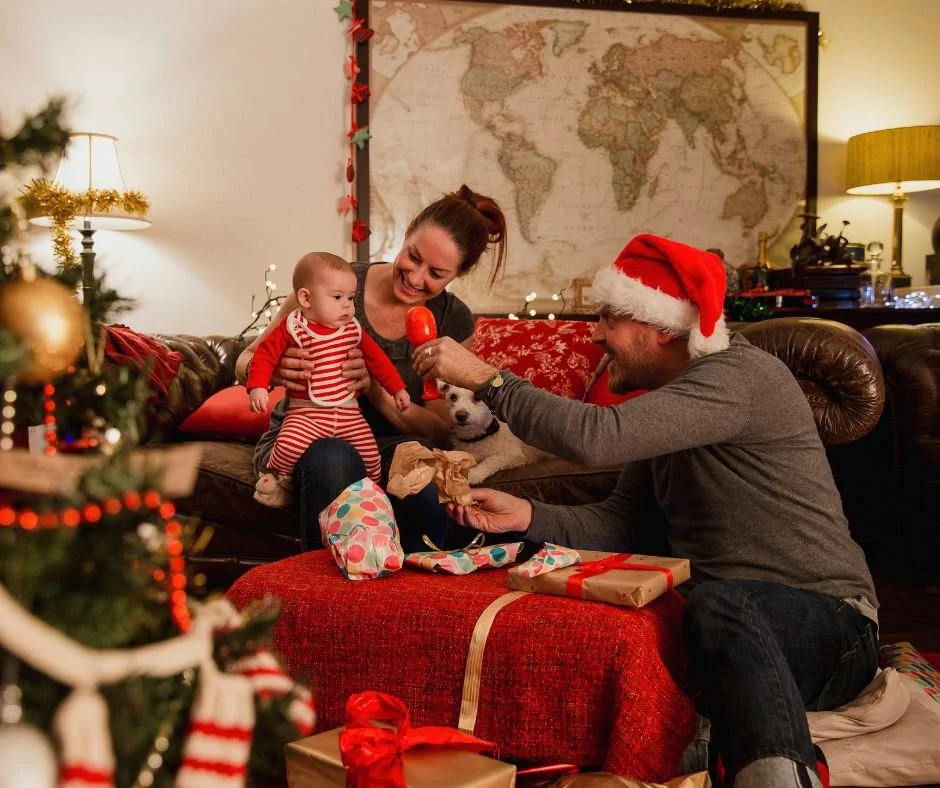
Most little ones are a bit unsure when visitors arrive. New faces, extra noise, and the sudden buzz of a busy house can feel like a lot to process. Some warm up quickly, others take their time, and some prefer to stay close for most of the day.
Protecting calm doesn’t mean cancelling plans (unless your gut says otherwise). It is simply about keeping the day at a pace your child can manage. Small resets help: stepping into another room for a breather, a quick snuggle, or slowing things down before bringing them back into the fun.
If you lead with connection rather than trying to keep up with everyone else’s rhythm, the day tends to feel gentler for all of you.
Overstimulation at Christmas: Understanding Sensory Overload in Babies and Toddlers
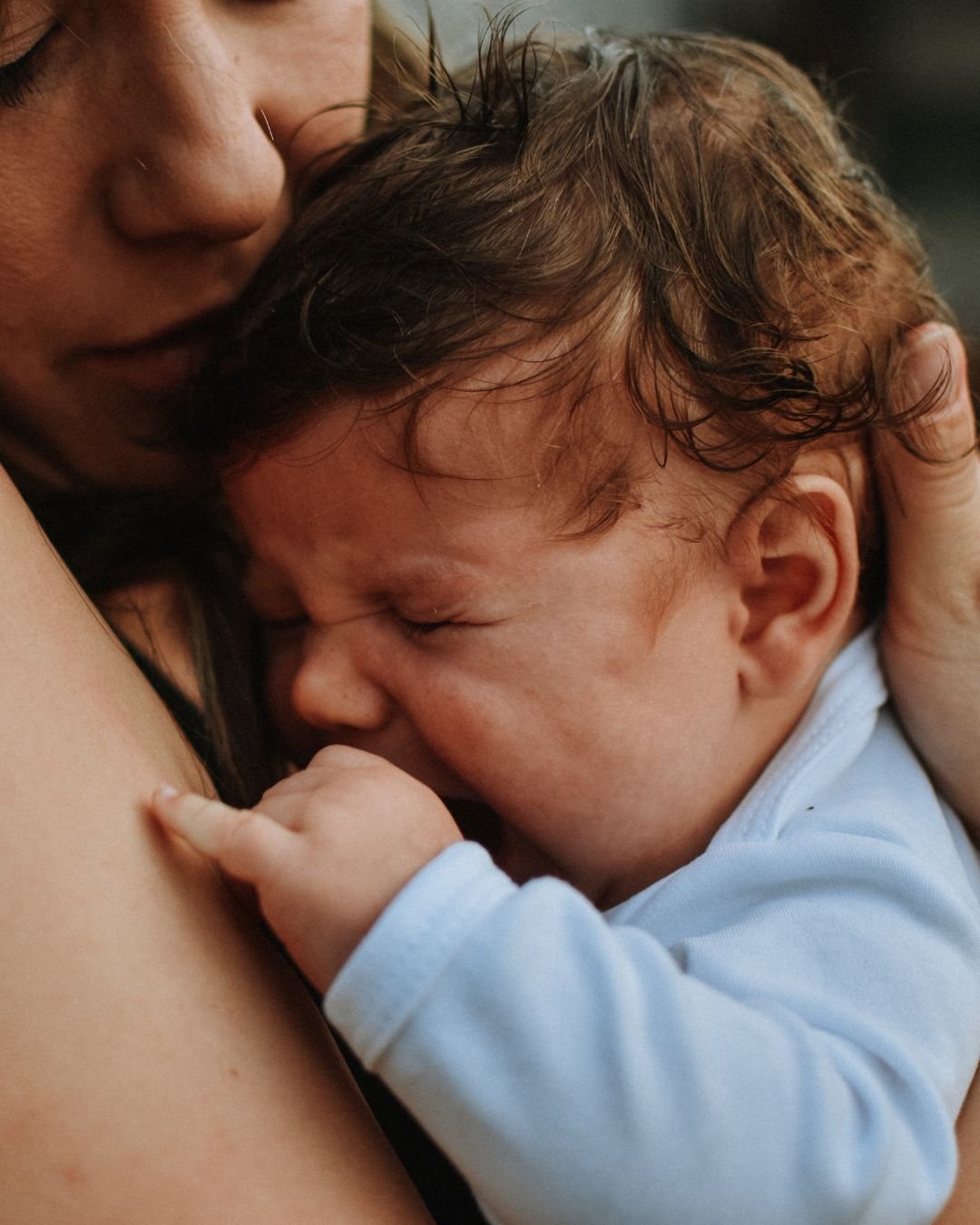
Christmas brings lights, music, decorations, excitement, gifts, new places, disrupted routines, and a level of sensory input that could overwhelm even the calmest adult.
When your little one’s nervous system is overloaded, you might see clinginess, tears, restlessness, early wakes, or overtired cries. This isn’t misbehaviour. It is simply a tiny body working hard to make sense of a very big day.
Pockets of grounding often work wonders. Being held, returning to a familiar song, stepping into a quieter space, or slowing everything down for a moment can help their nervous system settle so they can enjoy the parts that feel good.
Connection First: The Real Anchor for Babies and Toddlers at Christmas

When everything else feels unpredictable, connection offers the steadiness your little one needs. A calm voice at bedtime, a little extra closeness, or a cuddle before things overwhelm them can help ease the day.
Christmas can make parents feel they must protect the routine at all costs, but it is the relationship - not the clock - that carries your little one through the season.
A Final Word for Tired Parents in December
You can’t ruin sleep in one mince pie-fuelled week. Truly. Sleep stretches wobble, naps go off-piste, bedtimes wander, and then, as soon as life returns to normal, things settle again. Babies and toddlers are remarkably resilient.
Offer the calm you can. Protect the connection you value. Let the rest be good enough.
Download the Free Survival Guide to Christmas
If you’d like a little extra support this month, you can grab my free Survival Guide to Christmas here
It’s filled with calm, connection-first ideas for the moments when everything feels a bit too sparkly, a bit too loud, and a bit too much. Dip in whenever you need a steadier moment or a reminder that you’re doing just fine.
Happy December, and may your little one sleep just well enough for you to enjoy a quiet mince pie and maybe a warm mulled wine!